Choosing the Right Islamic School: A Guide for Parents
Discover practical guidance for parents on choosing the right Islamic school for their children to secure a bright future in this world and the Hereafter.
 Portal Islam



This article was first published in Indonesian. Baca versi Bahasa Indonesia →
Education is one of the most important investments parents can give to their children. Amidst a dynamic era, equipping children with strong general knowledge alongside a solid foundation of faith is an undeniable necessity. Therefore, the process of choosing an Islamic school that is right for your little ones requires thoroughness, du'a, and careful consideration from both father and mother.
As Muslim parents, we certainly yearn for children who are not only intellectually intelligent but also possess noble character, are diligent in worship, and hold a deep love for their religion. Islamic schools serve as the family's strategic partner in realizing this noble vision. However, with the diverse range of Islamic educational institutions available today—ranging from Madrasah and Integrated Islamic Schools (SIT) to Pesantren (Islamic boarding schools)—parents need to understand wise steps in making the best choice.
Understanding the Importance of Early Islamic Education
Early childhood is the golden age when children absorb various information, values, and habits very quickly. The Prophet Muhammad ﷺ reminded us through his statement about the importance of proper education and upbringing for children so they grow up in a straight fitrah (natural disposition).
Every child is born in a state of fitrah. It is his parents who make him a Jew, a Christian, or a Magian.
Narrated by al-Bukhari and Muslim
The hadith above emphasizes how significant the role of the environment, including schools, is in shaping a child's personality. An Islamic school is not merely a place to learn arithmetic and languages, but a space for character development that aligns with the values of Ahl al-Sunnah wal-Jama'ah (adherents of the Sunnah and the mainstream community). This is why choosing an Islamic school that is capable of combining a quality national curriculum with comprehensive reinforcement of Islamic values is so essential.
Practical Steps in Selecting an Islamic School
To avoid missteps, here are several practical guidelines that parents can use as a reference in selecting and determining the Islamic school that best suits their child's needs:
- Reviewing the School's Aqeedah and Vision-Mission: Ensure that the school has a sound, moderate (wasatiyyah) foundation of aqeedah, along with a vision and mission that align with uplifting Islamic values. Understand the background of the foundation or management of the educational institution.
- Evaluating Curriculum Quality: A good Islamic school is able to balance general subjects (science, mathematics, languages) and religious sciences (memorization of the Qur'an, fiqh of worship, Arabic, and noble character). Inquire about the learning methods applied, whether they are child-friendly and appropriate for their developmental stage.
- Assessing Teacher Competence and Role Modeling: Teachers are primary role models at school. Ensure that the educators at the school possess adequate academic qualifications, noble character, and a sound and polite understanding of religion.
- Observing the Environment and Facilities: Pay attention to the physical and social atmosphere around the school. A conducive, clean, safe environment far from negative influences is vital for a child's learning comfort. For parents residing in South Sulawesi, for instance, you can look at references such as 5 Best Islamic Kindergartens and Playgroups in Makassar to start your child's early education level.
- Matching Financial Capabilities: Financial planning is crucial in education. Choose a school whose tuition is affordable for the family budget without sacrificing other basic needs, because a child's educational success is also influenced by the parents' peace of mind regarding provision.
Aligning the Choice with the Child's Educational Level
A child's need for educational institutions certainly changes as they grow older. The approach for early childhood (kindergarten/early childhood education) is certainly not the same as selecting an elementary school (SD) or secondary school. At an early age, the main focus is building independence, healthy socialization, and introducing the basics of worship in an enjoyable way.
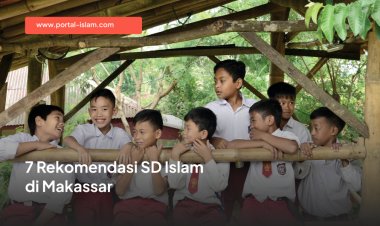
Upon entering elementary school age, children begin to need reinforced discipline, the ability to read the Qur'an well, and the habituation of congregational salah. For fathers and mothers seeking elementary school references in specific regions, information regarding 7 Recommended Islamic Elementary Schools in Makassar or reviews about 6 Recommended Integrated Islamic Schools in Gowa Regency can serve as helpful initial considerations.
In addition, it is also important for parents to pay attention to the social dynamics of their children when they reach adolescence. A school environment that maintains proper etiquette in social interactions between boys and girls is greatly needed to avoid undesirable things, such as an in-depth understanding of social boundaries as discussed in the article on Ikhtilat (Free Mixing): Definition, Impact, and Islamic Perspective.
The Role of Parental Du'a and Istikharah
External efforts in the form of school surveys, comparing curricula, and calculating budgets must certainly be perfected with spiritual efforts. As servants of Allah, we realize that human hearts are in His grasp. Therefore, performing the istikharah prayer before making a final decision is a highly recommended step.
O Turner of the hearts, make my heart firm upon Your religion.
Narrated by al-Tirmidhi
In addition, continually offer du'a to Allah for ease in educating children and to be brought together with trustworthy teachers and school environments. You can also practice various daily du'as for the peace of mind of the family, as outlined in the guide 20 Short Daily Du'as That Can Be Practiced Every Day.
If in the middle of this search process fathers and mothers feel hesitant or face differences of opinion with other family members, face it with good consultation (shura) and avoid bad prejudice. Guard our speech and hearts so that this process of educating children always counts as worship before Allah, and refers to peaceful Islamic principles that uphold ukhuwah (brotherhood).
Conclusion
Choosing the right Islamic school is a form of love and great parental responsibility toward the future of our beloved children. May through earnest effort, accompanied by sincere du'a and reliance (tawakkul) upon Allah, we always be granted guidance to lead our children to become righteous generations who are beneficial to religion, nation, and country.