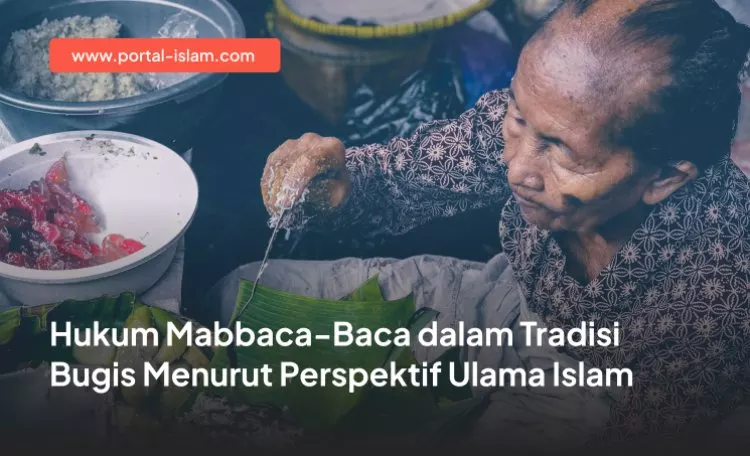
Islamic Ruling on Mabbaca-Baca in Bugis Tradition
Explore the Islamic perspective on Mabbaca-Baca, a traditional Bugis ritual involving prayers, examining its permissibility, bid'ah, and tawhid.
 Portal Islam



This article was first published in Indonesian. Baca versi Bahasa Indonesia →
Understanding Mabbaca-Baca in Bugis Culture
Mabbaca-baca is a well-known cultural tradition among the Bugis community in Indonesia. This tradition involves the recitation of prayers or chants during various events such as weddings, births, or other traditional ceremonies. For the Bugis community, mabbaca-baca is often regarded as an effort to seek protection, blessings, or healing from unseen forces or ancestors.
However, within the context of Islamic teachings, this tradition raises questions regarding its validity. Does mabbaca-baca align with Islamic teachings, or does it contradict the principles of tawhid? More importantly, is there any precedent from the Prophet Muhammad ﷺ or the Companions who performed similar acts? If not, this tradition might fall into the category of bid'ah (innovation in religion) or practices with no foundation in Islam.
Scholarly Views on Mabbaca-Baca
Islamic scholars view the tradition of mabbaca-baca with great caution. They remind us that any form of worship or ritual without a foundation in Islamic teachings can be categorized as bid'ah, an innovation in religion not taught by the Prophet Muhammad ﷺ. Several aspects must be considered to determine whether such a tradition can be accepted in Islam:
-
Content of Prayers or Chants: Scholars emphasize that the content of the prayers or chants heavily determines the ruling of the tradition. If the recited prayers are taken from the Qur'an or hadith, it can be considered a good deed. However, if the prayers contain elements of shirk, such as asking for help from other than Allah, the tradition becomes haram and constitutes bid'ah.
-
Intention and Purpose: The intention behind mabbaca-baca is also crucial. If the purpose of the tradition is to draw closer to Allah and seek protection or blessings from Him, the intention is considered good. However, if the intention is to attain supernatural power or rely on forces other than Allah, this contradicts the principles of tawhid and has no precedent from the Prophet Muhammad ﷺ.
-
Precedent from Scholars and the Prophet Muhammad ﷺ: It is essential to ensure that every act of worship has a clear precedent from the Prophet Muhammad ﷺ or the Companions. Traditions lacking a foundation or precedent in pure Islamic teachings can be regarded as bid'ah. Scholars remind us that forms of worship not exemplified by the Prophet Muhammad ﷺ should be avoided to preserve the purity of tawhid.
-
Use of Chants or Spells: Scholars also warn that the use of chants or spells originating outside of Islamic teachings can lead a person into acts of shirk. This is because such chants are frequently associated with practices that do not conform to Islam and have no precedent from the Prophet Muhammad ﷺ.
Islamic Rulings on Mabbaca-Baca
Generally, the ruling on mabbaca-baca in the Bugis tradition can be divided into three categories based on scholarly views:
-
Permissible (Mubah): If this tradition is carried out by reciting prayers that align with Islamic teachings, such as those taught by the Prophet Muhammad ﷺ, and with an intention sincere to Allah alone, the tradition is permissible. However, it is important to ensure the prayer has a strong foundation in Islam and does not fall under bid'ah.
-
Disliked (Makruh): If mabbaca-baca is performed using prayers lacking a strong foundation in Islam, yet containing no elements of shirk, this tradition may be considered makruh. Although not haram, it is best avoided due to its unclear basis and lack of precedent from the Prophet Muhammad ﷺ.
-
Prohibited (Haram): The mabbaca-baca tradition becomes haram if the prayers or chants contain elements of shirk, such as seeking protection from jinn or other unseen creatures, or if the intention behind the tradition opposes tawhid. Such practices fall into the category of bid'ah, which corrupts the purity of Islamic faith.
Evidences Regarding Mabbaca-Baca
Islam provides clear guidance regarding du'a and dhikr. In Surah Al-Baqarah, verse 186, Allah states:
وَإِذَا سَأَلَكَ عِبَادِي عَنِّي فَإِنِّي قَرِيبٌۖ أُجِيبُ دَعْوَةَ الدَّاعِ إِذَا دَعَانِۖ فَلْيَسْتَجِيبُوا لِي وَلْيُؤْمِنُوا بِي لَعَلَّهُمْ يَرْشُدُونَ
"And when My servants ask you concerning Me, indeed I am near. I respond to the invocation of the supplicant when he calls upon Me..." (Surah Al-Baqarah: 186)
This verse demonstrates that Allah is the sole destination for seeking help and protection. Therefore, all forms of du'a and supplication must be directed to Him alone.
The Prophet Muhammad ﷺ also stated:
مَنْ تَعَلَّقَ شَيْئًا وُكِلَ إِلَيْهِ
"Whoever attaches something (to other than Allah), he will be entrusted to it."
Narrated by AhmadThis hadith warns Muslims against depending on things other than Allah, including traditions that contain elements of shirk and lack any precedent from the Prophet Muhammad ﷺ. Such practices can fall into the category of forbidden bid'ah.
Impact and Implications of Mabbaca-Baca
Performing traditions that do not conform to Islamic teachings can negatively impact a person's faith. Dependence on forces other than Allah can diminish faith and distance an individual from pure tawhid. Furthermore, such practices can foster a reliance on rituals lacking any foundation in Islam and unexemplified by the Prophet Muhammad ﷺ, thereby obscuring the true teachings.
Conclusion
The mabbaca-baca tradition within the Bugis community must be examined through the lens of Islamic teachings and the example of the Prophet Muhammad ﷺ. As long as the prayers recited align with Islamic teachings, possess a strong foundation, and intend solely to draw closer to Allah, the tradition is acceptable. However, if the tradition contains elements of shirk, lacks precedent from the Prophet Muhammad ﷺ, or contradicts the principles of tawhid, it must be abandoned. Muslims must always return to the Qur'an, sunnah, and the guidance of trusted ulama as the primary guide in worship and cultural traditions, ensuring all actions accord with the pleasure of Allah and do not fall into the category of bid'ah.