Vice President Gibran Resigns: Political Dynamics and Constitution
Indonesian Vice President Gibran Rakabuming Raka has officially resigned. The MPR and President Prabowo Subianto are now managing the constitutional transition.
 Portal Islam



This article was first published in Indonesian. Baca versi Bahasa Indonesia →
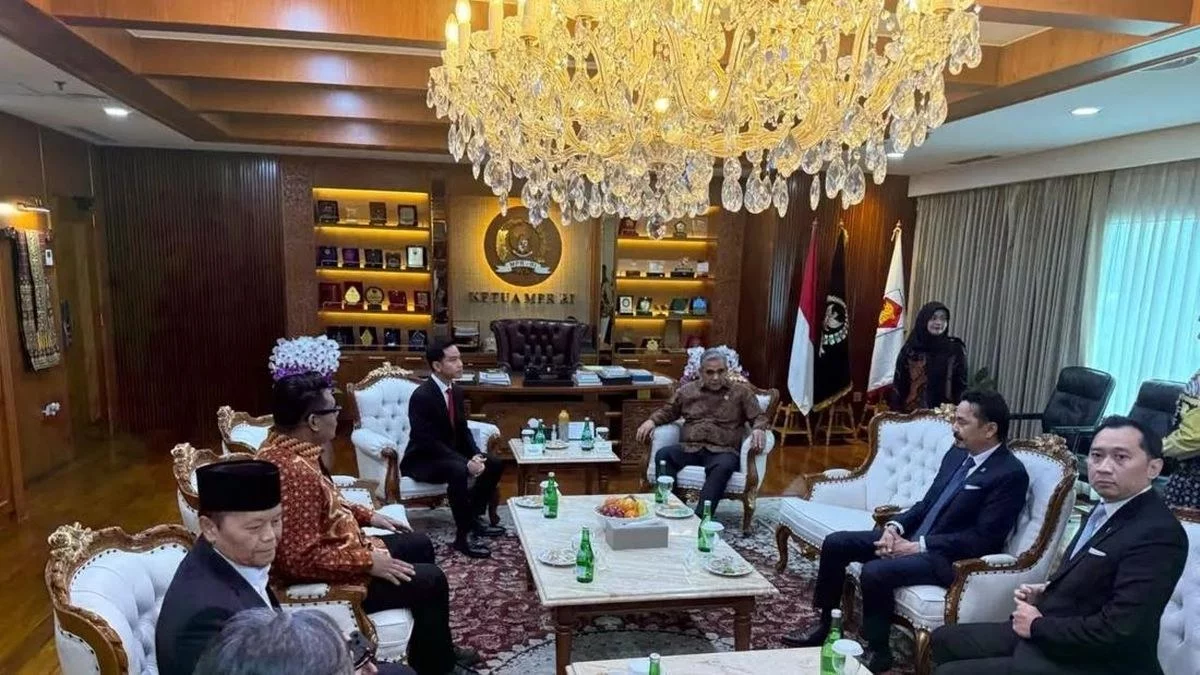
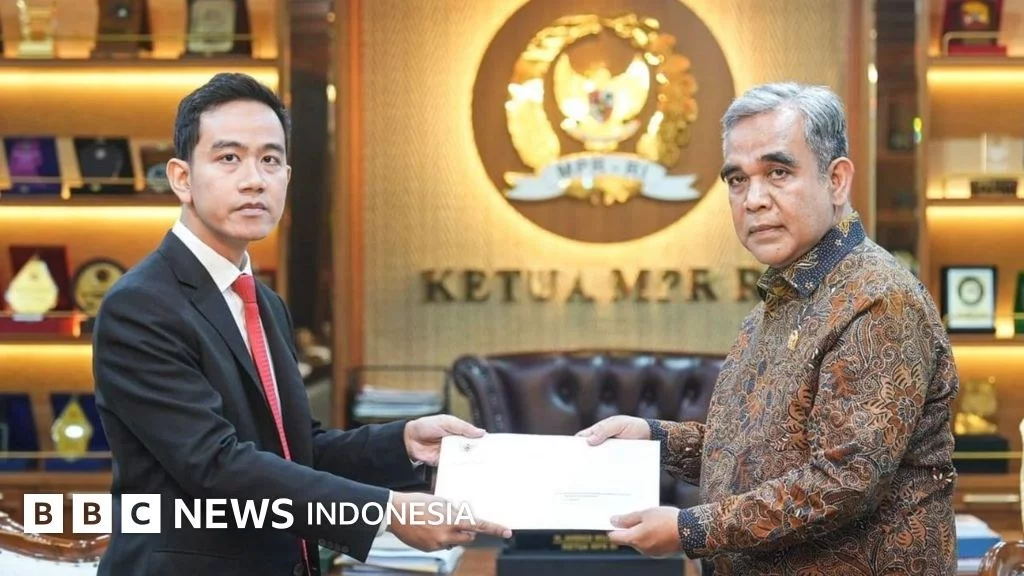
JAKARTA, PORTAL-ISLAM.COM — Vice President Gibran Rakabuming Raka officially submitted his resignation from his position as Vice President of the Republic of Indonesia for the 2024-2029 term on Thursday, November 12, 2026. According to reports from BBC News Indonesia, the resignation letter was delivered directly to the leadership of the MPR (the People's Consultative Assembly, Indonesia's upper legislative chamber) on Thursday morning at approximately 11:20 AM WIB (UTC+7) at the DPR/MPR building in Jakarta. This move makes Gibran the second vice president in Indonesian history to resign from office.
BBC News Indonesia journalist Quinawaty Pasaribu reported that the submission process was brief; Gibran arrived at the parliamentary complex at 11:15 AM WIB and departed at 11:36 AM WIB. The decision letter had also been presented by Gibran directly to President Prabowo Subianto earlier that morning before he proceeded to the MPR building. In the life of the nation, this constitutional debate has captured public attention as citizens seek to analyze the political system within the framework of a modern state wisely and constitutionally.
The Resignation Letter and Official MPR Statement
As cited in the BBC News Indonesia report, MPR Speaker Ahmad Muzani issued an official statement to the media after receiving the documents. Muzani confirmed that Gibran had submitted his resignation letter to the MPR leadership and a corresponding letter to President Prabowo Subianto. Muzani noted that Gibran requested the MPR to process his resignation immediately.
During the briefing, Speaker Ahmad Muzani read an excerpt from Gibran's resignation letter:
"Respectfully, I, Gibran Rakabuming Raka, Vice President of the Republic of Indonesia for the 2024-2029 term, hereby declare my resignation from the position of Vice President of the Republic of Indonesia upon my own request. I have made this decision with full awareness for the sake of the nation and the state, and for the smooth operation of the government. I believe the state and the people of Indonesia must be protected above myself."
When questioned by reporters regarding the reason behind the move, Muzani clarified that no specific reason was listed in the letter. Muzani emphasized, "There is no reason mentioned therein."
Constitutional Mechanism and Vacancy Status
Regarding the legal status of the resignation, the MPR provided a constitutional perspective. As reported by CNN Indonesia, the Chairman of the MPR's Constitutional Review Commission (K3), Taufik Basari (known as Tobas), explained that Gibran officially ceased his duties as Vice President the moment his resignation letter was received by the MPR on Thursday (12/11/2026).
Tobas explained that in the Indonesian constitutional legal system, there are three terms used to describe a president or vice president ending their term: resignation (berhenti), dismissal (diberhentikan), and death (mangkat). Therefore, the use of the word "berhenti" in Gibran's letter was deemed legally appropriate. "It is not that Gibran is resigning, but that Gibran is ceasing his duties. This is in accordance with both the nomenclature of the Constitution and the nomenclature used in his letter," said Tobas when contacted on Thursday (12/11/2026), as reported by CNN Indonesia.
Although the Constitution and relevant laws do not explicitly regulate the exact time a term ends after a letter is submitted, Tobas mentioned a legal interpretation that the term ends formally once the letter is received by the MPR. Thus, the vice presidency becomes vacant automatically in accordance with Article 8, Paragraph 2 of the Constitution. Tobas emphasized that the MPR does not have the authority to reject or accept the resignation, so no special decree is required to declare the cessation of office. Furthermore, the submission of the letter is declarative and cannot be revoked by the individual.
MPR Action Plan and Joint Meeting Agenda
To follow up on the resignation, the MPR leadership has scheduled constitutional steps. According to BBC News Indonesia, Speaker Ahmad Muzani explained that the MPR leadership will hold a joint meeting with MPR factions and the DPD (Regional Representative Council) on Friday (13/11/2026) afternoon. The discussion regarding this national leadership dynamic is closely related to efforts to build effective 2024 political leadership characteristics amidst a dynamic democratic climate.
As reported by BBC News Indonesia, the joint meeting will agree on four main agendas:
- Determining the schedule for the plenary session to elect a new vice president.
- Requesting the MPR to immediately send a letter to the President to propose two vice-presidential candidates to be elected during the plenary session.
- Establishing a verification team for the candidates proposed by the President.
- Agreeing on an ad hoc team tasked with drafting the MPR Decree.
Meanwhile, according to CNN Indonesia, Taufik Basari stated that the MPR has a maximum of 60 days to hold the plenary session for the election of a new vice president. Within that timeframe, the MPR will request 14 days from the President to submit two names of vice-presidential candidates to be elected in the plenary session.
President Prabowo Subianto's Response and Legal Background
According to BBC News Indonesia, approximately three hours after submitting the letter to the MPR, Gibran met with President Prabowo Subianto at the State Palace complex in Jakarta. The meeting was also attended by the leadership of the MPR, the DPR, and several cabinet ministers. Following the meeting, President Prabowo gave an official statement to the media.
President Prabowo stated that Gibran had come to him directly to submit his resignation letter before heading to the MPR. "With a heavy heart, I accept the letter and respect and support the decision he has made," said President Prabowo as quoted by BBC News Indonesia. The President praised the action, stating, "To me, he has demonstrated the attitude of a knight, full of responsibility, and has shown the attitude of a statesman."
In his explanation, President Prabowo also touched upon the issue of Gibran's educational background, which had been legally challenged by several parties in the Constitutional Court (MK) and the Supreme Court (MA). According to President Prabowo, Gibran felt he had pursued his education through a regular process, but differences between foreign and Indonesian educational systems caused issues regarding compliance with national constitutional requirements. Based on existing legal rulings, Gibran decided to resign for the greater interest of the nation and the state.
President Prabowo also expressed his appreciation for Gibran's assistance over the past two years, including during the election campaign period. The President emphasized his support and prayers for Gibran, whom he considers young and possessing a long future ahead.
Additionally, as cited by BBC News Indonesia, the Coordinating Minister for Law, Human Rights, Immigration, and Correctional Affairs, Yusril Ihza Mahendra, was also scheduled to meet with President Prabowo on Thursday (12/11/2026) afternoon to discuss the follow-up to the resignation. Yusril had previously explained on Tuesday (10/11/2026) that once the letter is declared constitutionally valid, the government will continue to run normally under the presidency of Prabowo Subianto without the automatic appointment of an acting official. This underscores the importance of understanding the role and challenges of political parties in a democratic system in maintaining government stability.
Islamic Wisdom: Maintaining Trust and National Unity
From an Islamic perspective, leadership and public office are heavy trusts that will be accounted for before Allah. When dynamics or changes occur in national leadership, the primary obligation of all elements of society is to maintain unity, peace, and to prioritize the common good over personal or group interests.
The act of placing public interest and national integrity above personal interests is in line with Islamic moral guidance in managing the affairs of the ummah. Leadership based on sincere intentions and the courage to make decisions for the common good is a form of effort to maintain the peace of the nation. Islam teaches its followers to always pray for leaders so that they are always given guidance, strength, and wisdom in running the government for the welfare of the people.
We hope that the entire constitutional process currently taking place in the legislative and executive branches proceeds smoothly, transparently, and in accordance with applicable legal corridors, so that national unity and stability are well maintained.