Indonesia Unveils Blue Carbon Projects at COP31 for Nature
Indonesia launches three strategic blue carbon projects in North Kalimantan, the northern coast of Java, and East Belitung at COP31 in Turkey.
 Portal Islam



This article was first published in Indonesian. Baca versi Bahasa Indonesia →
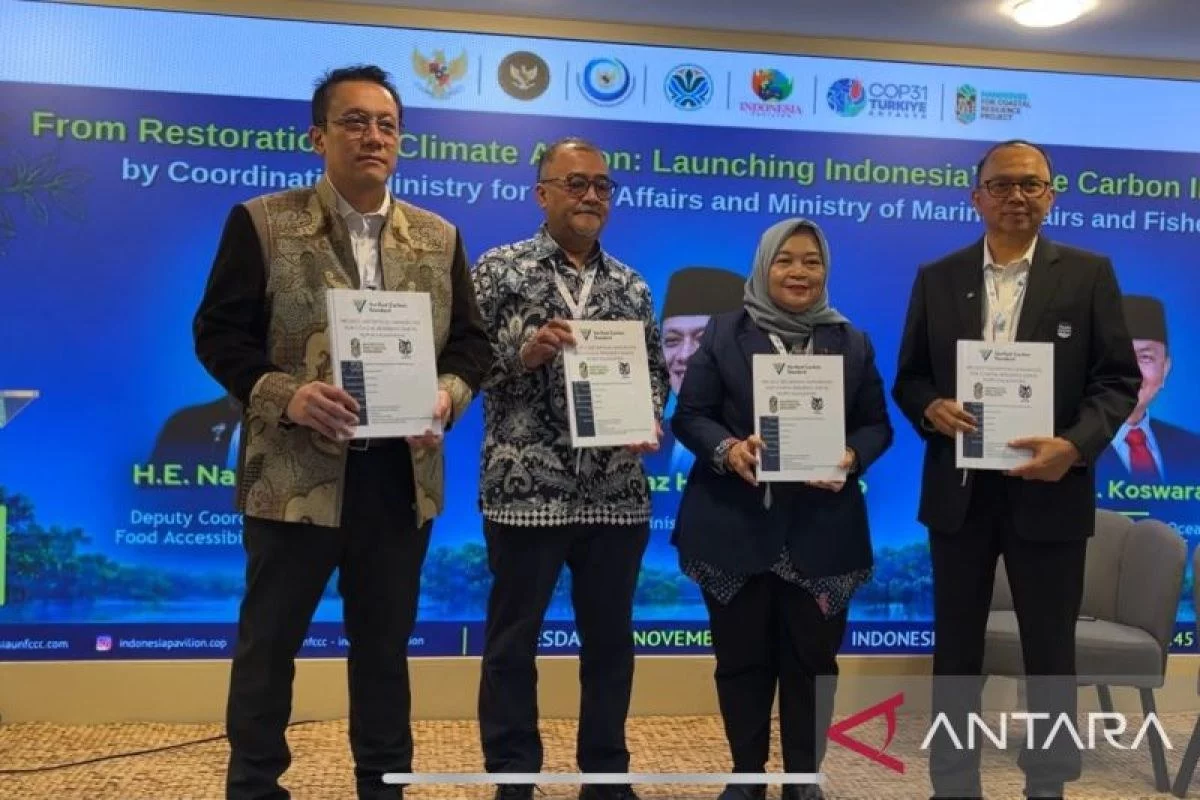
The Indonesian government officially launched three blue carbon projects on the sidelines of the 31st UN Climate Change Conference (COP31) in Antalya, Turkey, on Tuesday (Nov 17). According to reports cited from ANTARA and Republika, this strategic step involves the Ministry of Environment, the Ministry of Marine Affairs and Fisheries (KKP), and the Coordinating Ministry for Food to leverage coastal ecosystems for carbon emission offsetting.
The launch of this vital initiative demonstrates the nation's genuine commitment to preserving nature and tackling global climate change challenges. As a vast archipelago, protecting coastal and marine ecosystems aligns with the noble Islamic values that teach the importance of maintaining ecological balance and preventing corruption on Earth.
Details of the Three Blue Carbon Projects
Deputy Minister of Environment Diaz Hendropriyono explained that the three blue carbon projects are located in North Kalimantan, the northern coast of Java (Pantura), and East Belitung. This explanation was reported consistently by both ANTARA and Republika on Tuesday (Nov 18, 2026).
North Kalimantan Project and International Funding
The first project is situated in North Kalimantan, covering an area of 43,000 hectares. According to reports from Republika and ANTARA, this project is part of the Mangroves for Coastal Resilience (M4CR) program, managed jointly with the Coordinating Ministry for Food.
Funding for this project originates from the World Bank and Danish donors, valued at approximately 4 million US dollars, covering capacity building and project implementation. The carbon that can be offset from this region is estimated to reach 5.5 million tons of carbon dioxide equivalent using the Verra scheme.
The Deputy for Food Affordability and Security Coordination at the Coordinating Ministry for Food, Nani Hendiarti, stated that the M4CR project in North Kalimantan has been running for about 3.5 years and is currently in the process of entering the Carbon Unit Registry System (SRUK). She also emphasized the importance of coastal community involvement, noting that nearly 50 percent of the economic value derived from the blue carbon will be returned to the community.
Java Pantura and East Belitung Projects by KKP
Two other blue carbon projects are managed directly by the Ministry of Marine Affairs and Fisheries (KKP). Based on media reports, the project along the northern coast of Java covers an area of approximately 81,000 hectares.
Meanwhile, the project in East Belitung covers an area of 14,000 hectares. Deputy Minister of Environment Diaz Hendropriyono noted that the East Belitung project is exceptionally compelling and serves as a great sample because it focuses not only on mangroves but also encompasses seagrass bed ecosystems.
Legal Basis and Environmental Restoration Goals
To provide legal certainty for blue carbon trading, KKP has issued KKP Ministerial Regulation Number 17 of 2026 concerning the Management of Carbon Economic Value Instruments. The Director General of Marine Management at KKP, Koswara, asserted that the implementation of this carbon economic value has the primary goal of restoring environmental ecosystems as a solution to climate change. According to him, the benefits of this carbon value are expected to serve as a strong motivation for ecosystem restoration efforts.
Islamic Perspective on Environmental Conservation
Climate change mitigation efforts and the protection of coastal ecosystems through these blue carbon projects reflect the spirit of earth stewardship taught in Islamic teachings. Human beings are created as vicegerents (khalifah) on Earth, entrusted with the duty to cultivate and care for nature, not to destroy it.
وَلَا تُفْسِدُوْا فِى الْاَرْضِ بَعْدَ اِصْلَاحِهَا وَادْعُوْهُ خَوْفًا وَّطَمَعًاۗ اِنَّ رَحْمَتَ اللّٰهِ قَرِيْبٌ مِّنَ الْمُحْسِنِيْنَ ﴿٥٦﴾
And cause not corruption upon the earth after its reformation. And invoke Him in fear and aspiration. Indeed, the mercy of Allah is near to the doers of good.
Qur'an, Surah Al-A'raaf [7]: 56 (Sahih International)
Through strategic steps involving coastal communities as well as the restoration of mangrove and seagrass ecosystems, it is hoped that Indonesia's environmental sustainability will be preserved for the benefit of present and future generations.