Wearing Christmas Attire in Islam: Understanding Tasyabbuh
Is it permissible for Muslims to wear Christmas attire? Explore the Islamic perspective on tasyabbuh, MUI fatwas, and the importance of safeguarding faith.
 Portal Islam



This article was first published in Indonesian. Baca versi Bahasa Indonesia →
Introduction
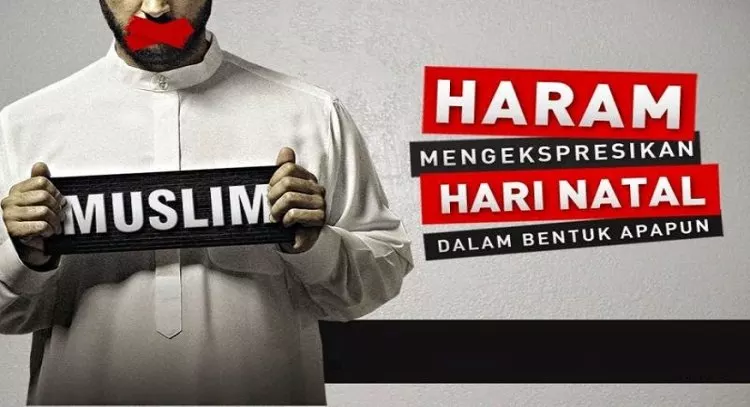
In a multi-religious society such as Indonesia, interactions between different faith communities often raise legal questions, particularly regarding participation in the traditions of other religions. One sensitive issue is the use of Christmas attire—such as Santa hats, pine trees, or nativity ornaments—by a Muslim. The majority of scholars, including MUI (the Indonesian Ulema Council), have firmly declared this to be haram (forbidden). This article outlines the legal basis and the dangers behind using such attributes from the perspective of Islamic Sharia.
Legal Basis and Scholars' Views
The prohibition against wearing Christmas attire is rooted in the principle of tasyabbuh bil kuffar (imitating the disbelievers), which is forbidden in Islam. The following are the primary arguments supporting this stance:
The Prohibition of Tasyabbuh in Hadith
The Prophet Muhammad ﷺ said: "Whoever imitates a people is one of them." Narrated by Abu Dawud.
Scholars emphasize that Christmas attire—as a symbol of Christian religious ritual—is a signifier that should not be imitated, as mimicking the symbols of other religions can obscure one's Islamic identity.Official Fatwa of the Indonesian Ulema Council (MUI)
In 2016, MUI issued a firm fatwa: Using non-Muslim religious attire (including Christmas items) is haram. This fatwa is based on the analysis that these items are not merely cultural, but carry doctrinal content that contradicts the concept of Tawhid (the oneness of Allah).Evidence from the Qur'an
In Surah Al-Furqan: 72, Allah says:
Exegesis scholars explain that "vain deeds" include participation in shirk rituals, which encompasses the celebrations of other religions.
As noted on the website islamqa.info, it is not permissible to celebrate non-Muslim festivals, nor is it permitted to celebrate innovations (bid'ah) introduced by some Muslims, even if they are presented as games. Muslims should not be content with or acknowledge such celebrations, let alone participate in them. For Muslims, there are no celebrations other than Eid al-Fitr and Eid al-Adha. Any other celebration is a new invention. If done as an act of worship, it is a blameworthy bid'ah. If done merely as a custom, it is still forbidden due to the aspect of imitating non-Muslims, as they are known for creating and celebrating these holidays. It was narrated by Abu Dawud (1134) and an-Nasa'i (1556) from Anas (may Allah be pleased with him):
The Prophet Muhammad ﷺ came to Medina, and they had two days in which they would play. He asked, "What are these two days?" They replied, "We used to play in them during the days of Jahiliyyah (pre-Islamic ignorance)." The Prophet ﷺ said, "Verily, Allah has replaced them for you with something better: the day of Adha and the day of Fitr." Declared authentic by al-Albani in As-Silsilah as-Sahihah (2021)
The Prophet ﷺ also said, "Whoever imitates a people is one of them." Narrated by Abu Dawud (4031), declared authentic by al-Albani in Sahih Sunan Abi Dawud.
If one cannot avoid a celebration within a game and is forced to participate, it is not permitted to continue the game. There are many permissible games that do not involve such things. Games of this nature cultivate in children a love for falsehood and accustom them to it. One must be cautious and keep children away from such things.
Analysis of Risks and Contemporary Context
Although some argue that Christmas attire has become a global culture, the Sharia perspective continues to view it as a religious symbol inseparable from the Christian belief in the divinity of Jesus. The following critical points reinforce the prohibition:
- Danger to Aqidah (Faith): Using Christmas attire can erode a Muslim's sensitivity toward Tawhid, especially for children who do not yet understand the boundaries between tolerance and participating in rituals.
- Identity Confusion: Islam emphasizes the principle of al-wala' wal barra' (loyalty to Muslims and disavowal of shirk). Adopting the symbols of another religion potentially obscures this loyalty.
- Commercial vs. Religious Context: Even though Christmas items are sold freely, the intention behind using them—whether for decoration or gifts—does not remove their symbolic nature. Scholars such as Sheikh Ibn Uthaymeen emphasized: "The basic ruling on imitating non-Muslims is haram, especially regarding celebrations."
Conclusion and Recommendations
As Muslims, the best approach is to maintain Islamic identity without becoming trapped in the symbolism of other religions. The tolerance taught by Islam is to respect the right of non-Muslims to worship, not to participate in their rituals. Alternatives include:
- Avoiding the use of Christmas attire at home, in the workplace, or on social media.
- Educating the family about the dangers of tasyabbuh and the importance of guarding one's faith.
- Showing tolerance in an Islamic way, such as by saying, "I wish you well in your worship according to your beliefs," without adopting their symbols.
By understanding these legal foundations, a Muslim can take a stance that is firm in faith yet polite in social interactions. Wallahu a'lam bish-shawab (And Allah knows best).