Indonesia Postpones Javan Rhino Relocation After MUI Concerns
Indonesia halts plans to relocate endangered Javan rhinos from Ujung Kulon following public outcry, mining concerns, and guidance from Islamic leaders.
 Portal Islam



This article was first published in Indonesian. Baca versi Bahasa Indonesia →
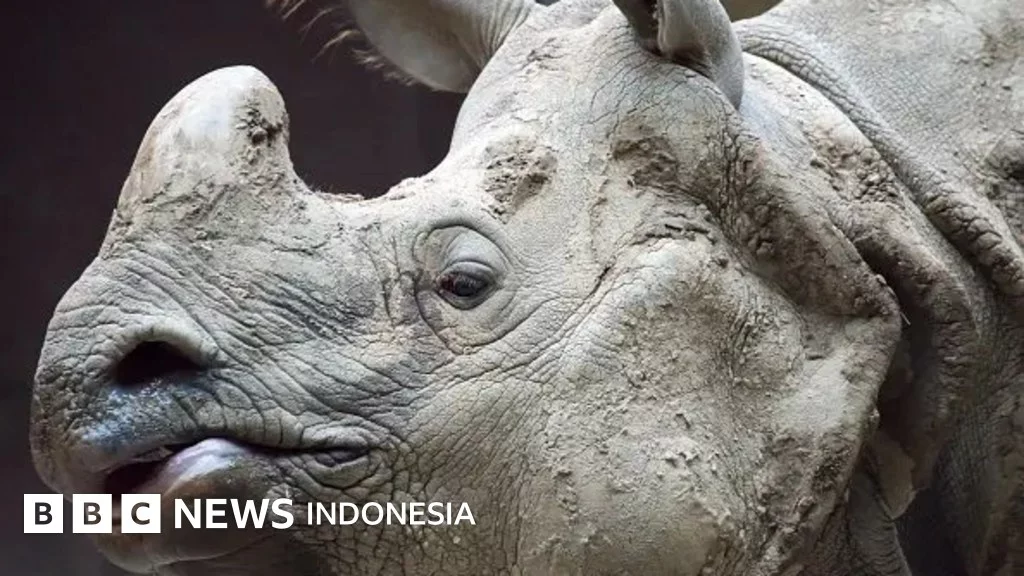
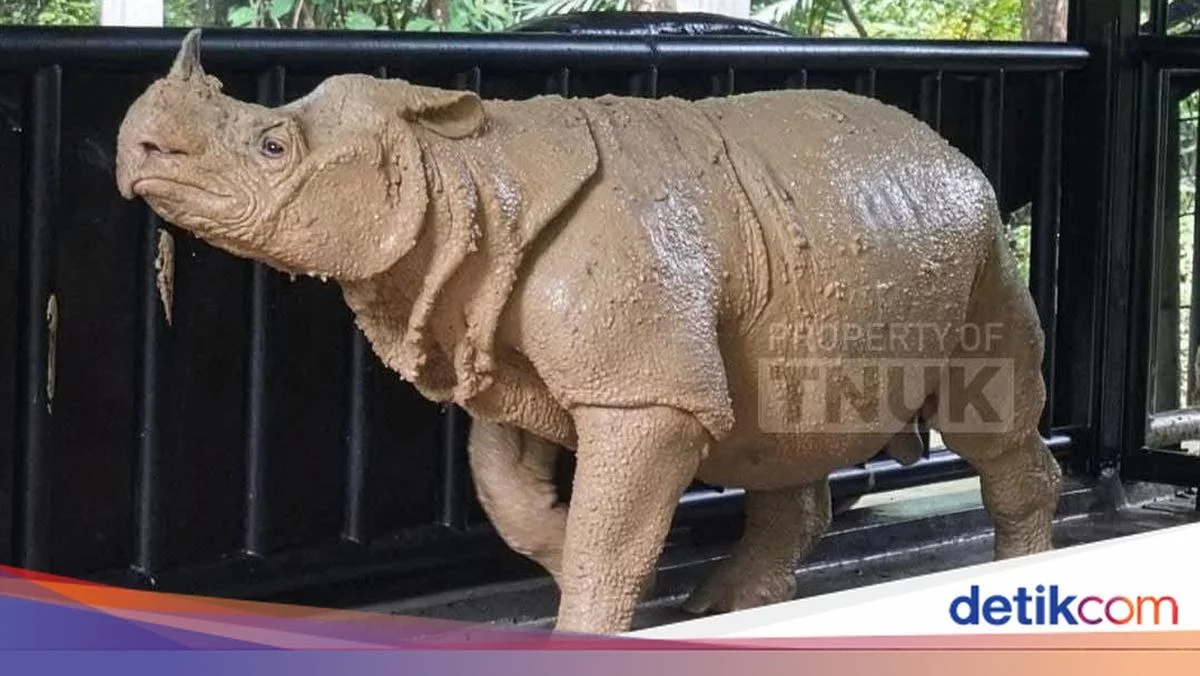
The Indonesian government has announced the postponement of its plan to relocate a population of critically endangered Javan rhinoceroses (Rhinoceros sondaicus) from Ujung Kulon National Park (TNUK) in Banten province to Alas Purwo National Park in East Java. The suspension will remain in place until comprehensive scientific studies are completed, following widespread public debate and scrutiny from MUI (the Indonesian Ulema Council).
The decision to pause the translocation comes amid heightened social media discussion regarding mining concession zones surrounding the borders of Ujung Kulon National Park. At the same time, the Indonesian Ulema Council has called on authorities to exercise utmost caution and avoid hasty decisions that could threaten the survival of the rare species and compromise the cultural identity of the people of Banten.
Postponement of Relocation Plans and Government Considerations
According to a BBC News Indonesia report published on Wednesday, 18 November 2026, the controversy began following remarks by Hashim Djojohadikusumo, the Special Envoy of the President for Climate and Energy, during a COP31 media briefing in Antalya, Turkey, on Thursday, 12 November 2026. Hashim raised the idea of moving a portion of the Javan rhino population to Alas Purwo, citing the vulnerability of Ujung Kulon to natural disasters such as earthquakes, tsunamis, and volcanic activity from Mount Anak Krakatau.
In Ujung Kulon, there is a Javan rhino sanctuary. There is a new concern regarding Mount Anak Krakatau. If a tsunami occurs due to an earthquake or eruption, our Javan rhinos could face extinction.
Hashim Djojohadikusumo
Hashim expressed optimism that the relocation initiative could attract donor agencies and international investors through conservation financing mechanisms at COP31, referencing a bilateral conservation agreement with Norway valued at Rp1.8 trillion to protect forests and tackle climate change across Indonesia's 57 national parks.
However, responding to public concern, the government through the Communications Agency (Bakom) clarified that it will not proceed with establishing a second habitat until thorough scientific assessments are completed. Senior Advisor to Bakom, Muhamad Hidayat, explained that strict ecological parameters must first be met.
The government consistently prioritises the safety of every Javan rhino. Therefore, no relocation will take place until comprehensive scientific studies confirm that food availability and habitat security [in Alas Purwo] can genuinely support conservation efforts.
Muhamad Hidayat
According to Hidayat, further research must evaluate water quality, home range requirements, forage availability, security, potential social friction with local communities, and ecological competition with other species such as the Javan banteng. Data compiled by Bakom estimates the current Javan rhino population at approximately 100 individuals, all residing in Ujung Kulon, with an inbreeding rate reaching 58.5%. The concept of establishing a secondary habitat was previously explored in the 1980s, targeting sites such as Mount Honje in Banten and Cikepuh in West Java.
Ministry of Forestry spokesperson Ristianto Pribadi added, as reported by BBC News Indonesia, that the government has not formally designated Alas Purwo as a second habitat. The proposal currently serves only as an option under evaluation to establish a healthy and viable secondary population over the long term.
Fatwa Assessment and the Stance of the Indonesian Ulema Council
According to a report by Republika on Wednesday, 18 November 2026, the Secretary of the Banten Provincial Chapter of MUI, Dr. H. Abdul Rozak, MA, voiced his opposition to the proposal. Rozak clarified that his opposition was expressed both in his personal capacity and as a community leader in South Tangerang, Banten, arguing that the relocation lacks clear urgency.
Personally and on behalf of community leaders in South Tangerang, Banten, I reject the plan to move the Javan rhinos to Alas Purwo.
Dr. H. Abdul Rozak, MA
Rozak revealed that the Banten MUI Fatwa Commission is scheduled to convene a special meeting shortly to formulate an official Islamic ruling (fatwa) on the matter. The deliberation will evaluate public interest (maslahah), animal welfare, and the fundamental principle in Islamic jurisprudence regarding the prevention of harm (mudarat).
In religious terminology, there is no underlying cause ('illah) that necessitates relocating these animals. If moving them causes substantial harm because their survival cannot be guaranteed at the new location, then it is legally impermissible.
Dr. H. Abdul Rozak, MA
Meanwhile, as reported by DetikHikmah on the same day, Chairman of the MUI Environmental Division, M. Azrul Tanjung, called on the government to avoid reckless decision-making. Tanjung highlighted that the Javan rhino has been an indigenous symbol and a source of pride for the people of Banten for centuries, carrying profound sociological and psychological significance.
First and foremost, we must exercise extreme care when dealing with native entities that are well established in a region. The rhinos in Ujung Kulon have lived there as an integral part of the landscape for centuries.
M. Azrul Tanjung
Regarding disaster risk mitigation, Tanjung argued that moving the animals to an unfamiliar ecosystem risks accelerating their decline due to environmental stress. He suggested that authorities focus on spatial management engineering and disaster mitigation within the rhinos' native sanctuary. This approach reflects broader government policies aimed at safeguarding essential national heritage.
Mining Suspicions and Regional Opposition
In addition to ecological considerations, religious leaders and local communities expressed concern over maps circulating online showing maritime areas surrounding Ujung Kulon National Park bordered by Mining Business Permit Areas (WUP). Azrul Tanjung warned against commercial interest or resource extraction driving the relocation project.
It would be deeply regrettable if this relocation were motivated purely by commercial activity. Not every square kilometre in this nation should be capitalised on for short-term economic gains. These rhinos are priceless assets, regardless of direct monetary returns.
M. Azrul Tanjung
Strong opposition has also emerged from local government officials in Banten. Vice Governor of Banten, Achmad Dimyati Natakusumah, reaffirmed his objection, calling the Javan rhino an indispensable cultural icon and asset for Banten. Similar concerns were raised by the Pandeglang Regency Government, the Banten Sultanate, civil society groups, members of the House of Representatives (DPR), and environmental advocates, who emphasized the high risks of stress and mortality involved in translocating the animals.
At the administrative level, effective coordination between central ministries and regional governments remains crucial to ensure environmental policy decisions safeguard both ecological integrity and local community interests, aligning with ongoing efforts to ensure regional budget allocation plans prioritize environmental sustainability.
Islamic Perspectives on Wildlife Conservation and Ecological Balance
In Islamic tradition, humanity is entrusted with the stewardship (khalifah) of the earth, carrying the responsibility to maintain ecological balance and treat all living creatures with mercy. Decisions that impact the survival of rare species demand utmost care to prevent destruction and disruption of natural systems.
Allah reminds humanity in the Qur'an to safeguard the natural environment and refrain from causing ruin on earth:
وَلَا تُفْسِدُوْا فِى الْاَرْضِ بَعْدَ اِصْلَاحِهَا وَادْعُوْهُ خَوْفًا وَّطَمَعًاۗ اِنَّ رَحْمَتَ اللّٰهِ قَرِيْبٌ مِّنَ الْمُحْسِنِيْنَ ﴿٥٦﴾
And cause not corruption upon the earth after its reformation. And invoke Him in fear and aspiration. Indeed, the mercy of Allah is near to the doers of good.
Qur'an, Surah Al-A'raaf [7]: 56 (Sahih International)
The principle of compassion toward animals is equally evident in the Sunnah of the Prophet Muhammad ﷺ. He taught that cruelty toward animals or negligence regarding their wellbeing incurs severe moral and spiritual accountability before the Creator:
A woman was punished because of a cat which she locked up until it died, and entered Hellfire because of it. She neither fed it nor gave it water while confining it, nor did she set it free to eat from the vermin of the earth.
Narrated by al-Bukhari
Guided by the Islamic spirit of moderation (wasatiyyah) and rigorous scientific evaluation, cooperation between the government, ecological experts, religious scholars, and local communities is expected to yield balanced conservation policies—protecting the Javan rhino while honoring the rich natural and cultural heritage of Ujung Kulon.