Preparing for the Hereafter: Islamic Belief in the Afterlife
Discover Islamic teachings on life after death, the realm of Barzakh, Judgment Day, and essential steps every Muslim must take to prepare for the Hereafter.
 Portal Islam
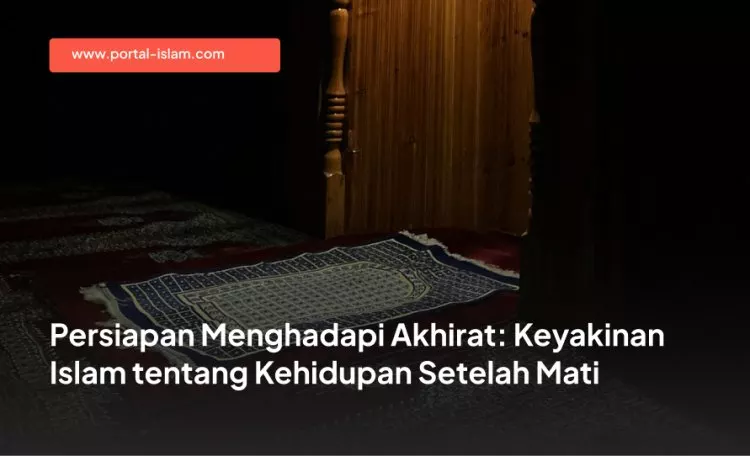



This article was first published in Indonesian. Baca versi Bahasa Indonesia →
The Hereafter is the ultimate destination of every human being. In Islamic teachings, this worldly life is merely temporary, while the life to come is eternal. Allah and the Prophet Muhammad ﷺ have taught us extensively about life after death. This article explores how to prepare ourselves for the Hereafter and examines core Islamic beliefs regarding the afterlife, supported by authentic proofs from the Qur'an and Sunnah.
1. Islamic Beliefs About Life After Death
In Islam, we are taught that after death, every person will be held accountable for their actions. The worldly life is a place of action, whereas the eternal life belongs to the Hereafter. Allah says:
"Every soul shall taste death, and then to Us you shall be returned."
Qur'an, Al-Ankabut: 57
After passing away, every individual enters the realm of barzakh (the intermediate life in the grave) before being resurrected for accountability on the Day of Judgment. It is there that good and bad deeds will be weighed, determining one's final abode: Paradise or Hellfire.
2. Life in Barzakh: The World of the Grave
Life after death does not simply end with burial. Islam teaches the existence of life in the grave, known as barzakh. The Prophet ﷺ said:
"When a person dies, their deeds come to an end except for three: ongoing charity (sadaqah jariyah), beneficial knowledge, or a righteous child who prays for them."
Narrated by Muslim
This hadith highlights that even after death, a person can continue to benefit from ongoing charity, beneficial knowledge left behind, and the prayers of a righteous child. Therefore, it is crucial to prepare good deeds whose reward continues to flow after we pass away.
3. The Day of Judgment: Ultimate Accountability
A central pillar of faith in Islam is belief in the Day of Judgment, the Day of Recompense when every action will be accounted for. Allah says:
"Say, 'Everyone acts according to their own disposition, and your Lord knows best who is most guided on the path.'"
Qur'an, Al-Isra: 84
On the Day of Judgment, all deeds—whether open or hidden—will be brought to light and judged. Those who performed righteous deeds will receive a good reward, while those who committed evil will receive a fitting recompense.
4. Preparing for the Hereafter: Righteous Deeds and Repentance
To be ready for the Hereafter, Muslims are encouraged to strive to perform as many righteous deeds as possible and to repent sincerely for past sins. Allah says:
"Indeed, Allah accepts the repentance of His servants, and whenever a person repents sincerely, Allah forgives all their sins."
Qur'an, Az-Zumar: 53
Performing righteous deeds—both obligatory acts of worship like salah and zakat, as well as general acts of goodness—is the best way to prepare for life after death. Furthermore, sincere repentance (tawbah) for any transgressions committed forms an essential part of our preparation.
5. Sustainable Rewards Through Ongoing Charity (Sadaqah Jariyah)
One powerful way to ensure a continuous stream of rewards after death is by establishing ongoing charity (sadaqah jariyah), such as building a mosque, supporting educational initiatives, or spreading beneficial knowledge. The Prophet ﷺ said:
"When a person dies, their deeds come to an end except for three things: ongoing charity, beneficial knowledge, or a righteous child who prays for their parents."
Narrated by Muslim
This underscores how vital it is to prepare ongoing charity as a provision that will steadily yield rewards long after we leave this world.
6. Knowing Allah and Preserving Monotheism (Tawhid)
Preparing for the Hereafter is achieved not only through outward deeds, but also by strengthening our faith in Allah and guarding our monotheism (tawhid)—the firm belief in Allah as the One God without partners. Allah says:
"The true believers are only those who believe in Allah and His Messenger and never doubt."
Qur'an, Al-Hujurat: 15
Unshakable faith in Allah inspires a person to fulfill His commands and refrain from His prohibitions, thereby ensuring safety and success in the Hereafter.
7. Navigating the Trial of the Hereafter: The Bridge of Sirat
Following judgment, humanity will cross the bridge of Sirat, described as thinner than a strand of hair and sharper than a sword. Only those with good deeds and a pure heart will cross it safely. The Prophet ﷺ said:
"Indeed, you will cross a bridge thinner than a hair and sharper than a sword. So hold fast to righteous deeds."
Agreed upon (Bukhari and Muslim)
Hence, it is essential for us to constantly refine our actions and multiply our prayers so that we may pass this severe test with ease and attain Paradise.
8. Paradise and Hellfire: The Ultimate Abode
As the ultimate recompense for human actions, the Hereafter grants each soul what it earned. For those who believe and do good deeds, Allah promises Paradise filled with eternal bliss. Conversely, for those who disbelieve and persist in sin, Allah warns of a painful punishment in Hellfire. Allah says:
"Indeed, those who believe and do righteous deeds—they are the best of creatures."
Qur'an, Al-Bayyina: 7
Paradise is the destination for those obedient to Allah, while Hellfire is the abode for those who rebel against Him. Therefore, we must continually strive to do good and protect our faith to secure the best reward in the Hereafter.
Conclusion
Preparing for the Hereafter is an essential duty for every Muslim. The life of this world is a field for cultivating good actions, whereas the eternal life of the Hereafter is our final destination. By keeping firm faith in Allah, performing righteous deeds, seeking sincere repentance, and guarding our tawhid, we can adequately prepare for life after death. May Allah make it easy for us to live with full awareness of the Hereafter, granting us happiness both in this world and the next.