Indonesian Govt Confirms Rakyat School Won't Use UI Urban Forest
The Indonesian government confirms that the proposed Rakyat School will not use the Universitas Indonesia urban forest area, following public concern.
 Portal Islam



This article was first published in Indonesian. Baca versi Bahasa Indonesia →
The Indonesian government has affirmed that plans to construct a new educational facility will not utilize the Universitas Indonesia (UI) urban forest area. Cabinet ministers provided this assurance following widespread rumors regarding the site initially rumored to host the educational project.
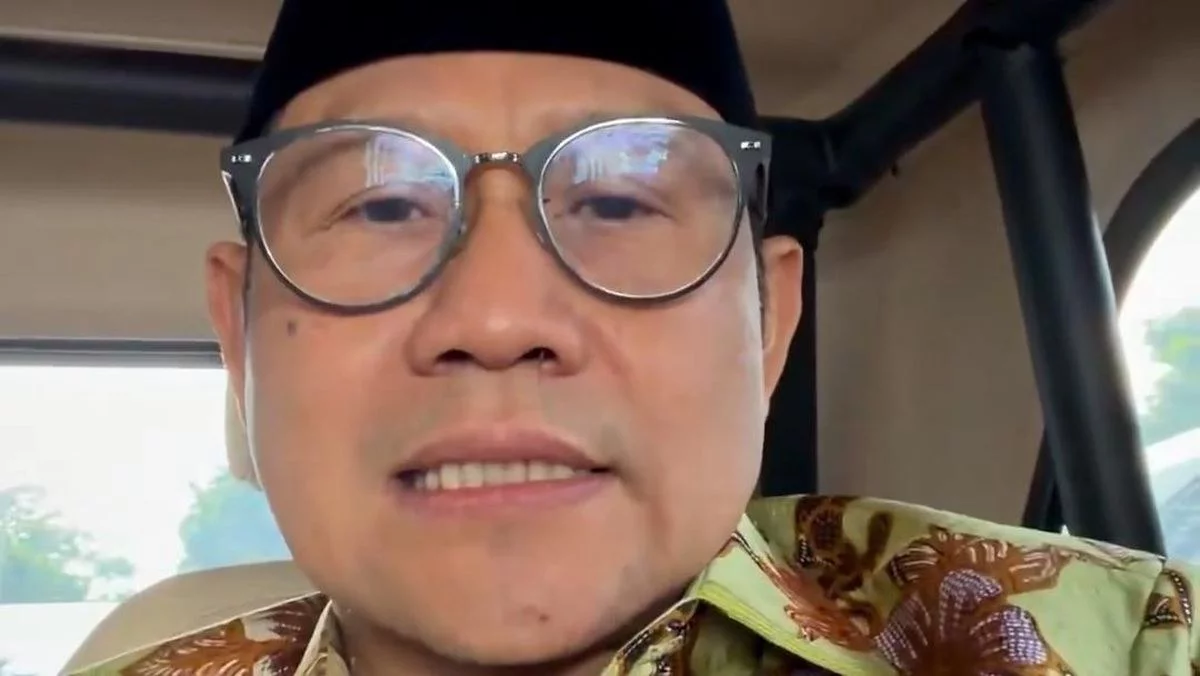
According to a report by CNN Indonesia on Tuesday, November 18, 2026, at 14:30 WIB (UTC+7), Coordinating Minister for Community Empowerment Abdul Muhaimin Iskandar (Cak Imin) stressed that the Rakyat School (People's School) will not be built within the UI urban forest. Cak Imin stated that he had coordinated with relevant officials, particularly Minister of Social Affairs Saifullah Yusuf (Gus Ipul), and confirmed there are no plans or decisions whatsoever to use the UI urban forest for that purpose.
Ministry of Social Affairs Clarifies Land Alternatives
Meanwhile, as cited by Republika on Tuesday, November 18, 2026, at 18:19 WIB (UTC+7), Minister of Social Affairs Saifullah Yusuf provided a more detailed explanation regarding the land exploration currently underway. Gus Ipul clarified that reports placing the construction site inside the urban forest are incorrect.
"So that is wrong. The location is not in the urban forest, but on land belonging to UI on the Jakarta side that borders the urban forest. The urban forest remains intact," Gus Ipul said on Wednesday (November 18, 2026), as quoted by Republika.
Gus Ipul explained that the plan originated from a request by the Ministry of Social Affairs for UI to explore potential land use for the construction of the Rakyat School. UI subsequently offered several alternatives, including locations in Rawamangun and Cawang, East Jakarta, each measuring approximately 1.5 hectares. Additionally, another land alternative was proposed at the UI Depok Campus, specifically on the portion of the campus located within the Jakarta territory bordering the urban forest zone. According to Gus Ipul, these alternatives remain in the initial discussion stage, and no final decision regarding the location has been made.
Commitment to Regulatory Compliance and Field Studies
Furthermore, Gus Ipul claimed that the plan has been communicated to Jakarta Governor Pramono Anung. He noted that the provincial government fundamentally supports the initiative as long as all applicable regulations are fully satisfied.
"Yesterday I discussed this with Mas Pram. As long as it does not violate regulations, he agrees," said Gus Ipul, as reported by Republika. Nevertheless, these discussions do not constitute a final decision, as the project still requires field inspections, administrative verification, and technical and feasibility studies before proceeding to a cooperation agreement stage.
The government also guaranteed it will not force construction in locations that contravene the law, spatial planning, or safety requirements. "What is clear is that the Rakyat School will not be built in locations that violate regulations, especially in disaster-prone areas. The requirements are very strict. Not a single rule may be broken. Therefore, construction cannot just be carried out arbitrarily," Gus Ipul remarked.
Official Statement from Universitas Indonesia
Previously, Universitas Indonesia, through its Director of Public Relations, Media, Government, and International Affairs Erwin Panigoro, issued an official statement regarding the proposed land. UI emphasized that the land under discussion is not part of the urban forest area.
The university also stated that determining the definitive location for the construction of the Rakyat School falls entirely under the authority of the government. Consequently, this exploratory process will continue to be pursued based on the results of in-depth studies and compliance with all applicable statutory requirements.
From an Islamic perspective, every public policy concerning the public interest and education should always prioritize caution, mutual benefit, and the preservation of the environment as a trust from Allah Subhanahu wa Ta'ala to be safeguarded to the best of our ability.
وَلَا تُفْسِدُوْا فِى الْاَرْضِ بَعْدَ اِصْلَاحِهَا وَادْعُوْهُ خَوْفًا وَّطَمَعًاۗ اِنَّ رَحْمَتَ اللّٰهِ قَرِيْبٌ مِّنَ الْمُحْسِنِيْنَ ﴿٥٦﴾
And cause not corruption upon the earth after its reformation. And invoke Him in fear and aspiration. Indeed, the mercy of Allah is near to the doers of good.
Qur'an, Surah Al-A'raaf [7]: 56 (Sahih International)
Parents who care about the future of their children naturally pay close attention to their learning process. As a guide in educating children, readers may consult the guide 10 Steps to Choosing the Best Islamic School for Your Child to ensure the younger generation receives righteous and beneficial knowledge.