Indonesia and Brazil Explore Rainforest and Carbon Cooperation
Indonesia and Brazil discuss tropical forest conservation financing, Ecora carbon certification, and community empowerment at COP31 in Türkiye.
 Portal Islam



This article was first published in Indonesian. Baca versi Bahasa Indonesia →
JAKARTA — The governments of Indonesia and Brazil are exploring strengthened cooperation in sustainable tropical forest management. This collaboration encompasses conservation financing, the development of carbon certification systems, and the economic empowerment of communities residing around forest areas.
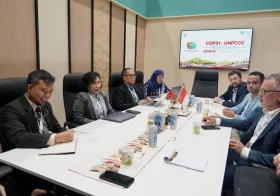
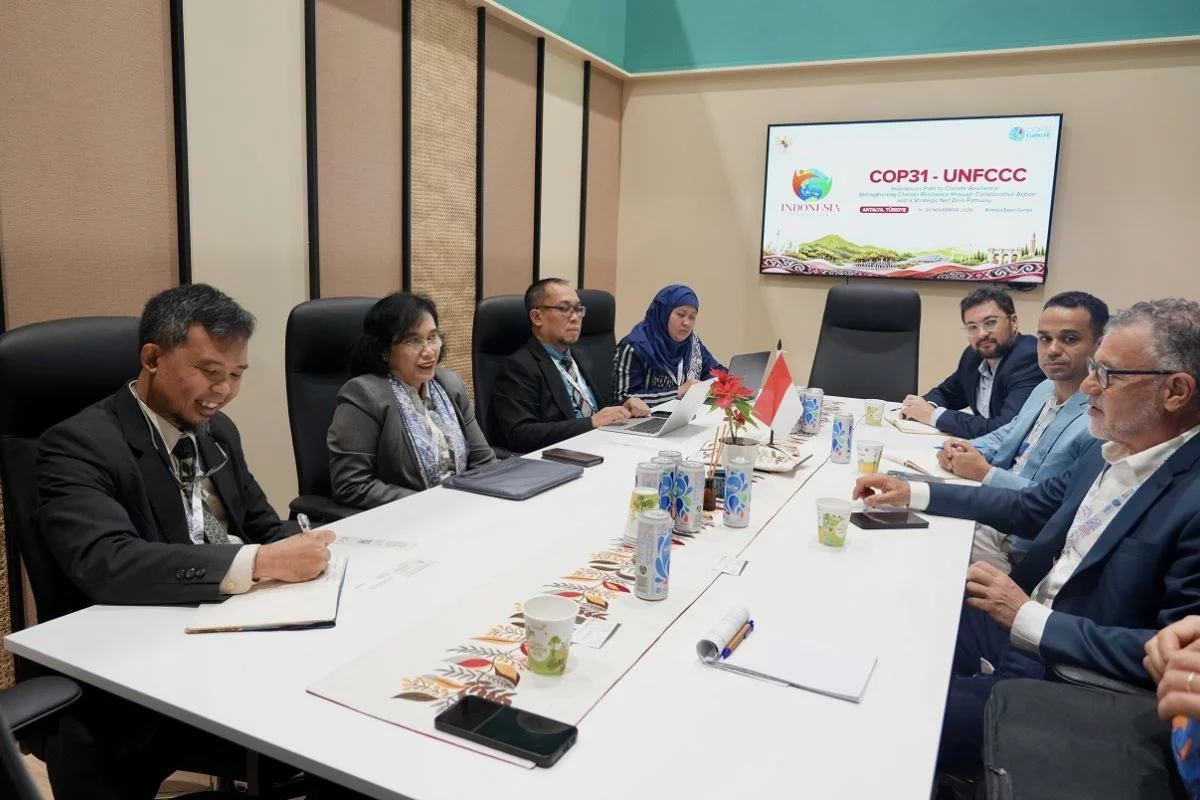
According to reports by ANTARA and Republika on Saturday (November 14, 2026), these strategic partnership opportunities between the two major tropical forest-holding nations were discussed during a bilateral meeting on the sidelines of the 31st UN Climate Change Conference (COP31 UNFCCC) held in Antalya, Türkiye, on Friday (November 13, 2026).
Exchange of Forest Conservation Experience and Community Empowerment
During the meeting, the Indonesian Ministry of Forestry delegation was represented by Forestry Expert Staff Haruni Krisnawati alongside Head of the Bureau of Public Relations and Foreign Cooperation Ristianto Pribadi. Meanwhile, Brazil was represented by Virgilio Viana, Director General of the Fundação Amazônia Sustentável (FAS), and Marco Tulio Scarpelli Cabral, who handles climate, energy, and environmental affairs at the Brazilian Ministry of Foreign Affairs.
As cited from ANTARA and Republika reports, one of the main topics discussed was Brazil's experience in integrating environmental protection with the enhancement of community welfare in the Amazon region through the FAS program. This approach connects forest protection with fulfilling basic community needs, such as access to drinking water, solar energy, internet connectivity, and food security.
Indonesian Ministry of Forestry Expert Staff Haruni Krisnawati highlighted the importance of this model for Indonesia.
One of the experiences that has caught our attention is the FAS program in promoting sustainable development for communities in the Amazon region,
Haruni Krisnawati, Ministry of Forestry Expert Staff
As reported by Republika, this collaboration is expected to strengthen forest protection funding while ensuring that economic benefits are felt directly by local communities. For residents living in forest regions, fulfilling daily livelihood needs is part of the endeavor to seek sustenance, which should be accompanied by du'a for a husband who is working to realize a halal and blessed family welfare.
Results-Based Financing Mechanism and Ecora Carbon Certification
In addition to community empowerment, the Indonesian delegation studied the results-based forest protection financing mechanism implemented by Brazil through the Amazon Fund. This exchange serves as an important vehicle to strengthen national forest management and secure international funding support.
According to ANTARA reports, the Brazilian side also offered exploratory cooperation regarding Ecora, a forest carbon credit certification system developed in Brazil. The Ecora system is designed to strengthen the integrity of the forest carbon market through science-based methodologies, traceability, verification, and transparent governance.
For Indonesia, learning about Ecora and conservation financing is highly relevant to achieving the targets of Indonesia's FOLU Net Sink 2030, strengthening Social Forestry, ecosystem restoration, and developing a credible forestry carbon market suited to national conditions. These efforts to maintain forest ecosystems simultaneously preserve natural beauty spread across various best tourist destinations in Indonesia.
Follow-Up and Technical Workshop Plans for 2027
As a concrete step, according to explanations by Head of the Bureau of Public Relations and Foreign Cooperation Ristianto Pribadi as cited by ANTARA and Republika, both parties discussed the possibility of drafting a joint white paper regarding Indonesia-Brazil partnership opportunities.
Furthermore, both countries plan to hold a technical workshop scheduled for February or March 2027. The workshop will involve government agencies, universities, civil society organizations, and development partners to deepen discussions on conservation financing and sustainable forest management.
Islamic Perspective: Preserving Forests and Economic Justice
In the Islamic view, forests and the environment are trusts from Allah Subhanahu wa Ta'ala that must be preserved. Forest conservation efforts and the strengthening of transparent, measurable carbon market systems align with the principles of Islamic transactions (muamalah), namely avoiding ambiguity (gharar) and preventing corruption and damage on earth.
Allah Almighty spoke regarding the prohibition of causing mischief on earth after it has been set in order:
وَلَا تُفْسِدُوْا فِى الْاَرْضِ بَعْدَ اِصْلَاحِهَا وَادْعُوْهُ خَوْفًا وَّطَمَعًاۗ اِنَّ رَحْمَتَ اللّٰهِ قَرِيْبٌ مِّنَ الْمُحْسِنِيْنَ ﴿٥٦﴾
And cause not corruption upon the earth after its reformation. And invoke Him in fear and aspiration. Indeed, the mercy of Allah is near to the doers of good.
Qur'an, Surah Al-A'raaf [7]: 56 (Sahih International)
The application of honest green economy governance, based on scientific verification and oriented toward the welfare of the broader community, is a manifestation of the principle of public interest (maslahah ammah) encouraged in Islam.