Understanding Tarbiyah: Meaning, Pillars & Methods
Learn the meaning, core dimensions, and methods of tarbiyah in Islam. Discover how holistic Islamic education shapes faithful and virtuous generations.
 Portal Islam



This article was first published in Indonesian. Baca versi Bahasa Indonesia →
What Is Tarbiyah?
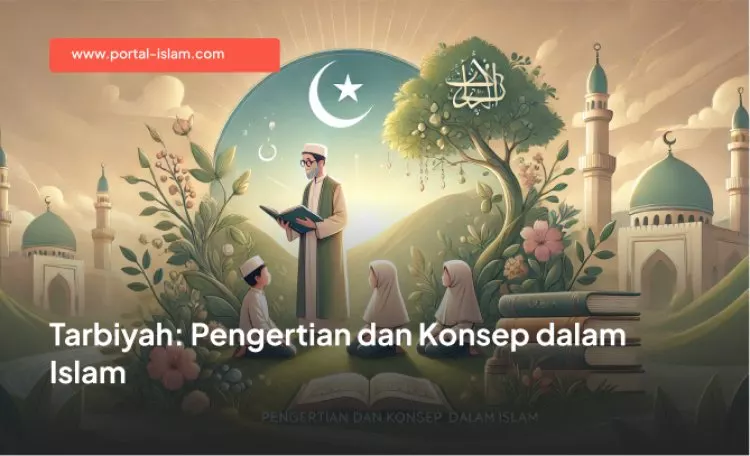
In Arabic, the word tarbiyah broadly denotes education, nurturing, or care. It derives from the root verb rabba, which means "to grow," "to foster," or "to rear." Within Islam, tarbiyah encompasses every form of holistic education aimed at cultivating an individual who possesses strong faith, deep God-consciousness (taqwa), and exemplary moral character.
Highlighting the fundamental role of divine guidance and education, Allah states in the Qur'an:
"He taught man that which he knew not."
Surah Al-‘Alaq 96:5
The Importance of Tarbiyah in Islam
Tarbiyah served as the primary methodology utilized by the Prophet Muhammad ﷺ to mentor the Companions (Sahabah) and establish an ideal Islamic society. This comprehensive nurturing process addresses spiritual belief, acts of worship, moral refinement, and intellectual growth.
The profound influence of upbringing and environment on human development is reflected in the famous prophetic tradition:
"Every child is born upon the natural disposition (fitrah); it is their parents who make them a Jew, a Christian, or a Magian."
Narrated by al-Bukhari and Muslim
This hadith underlines how education and environment play a decisive role in shaping an individual's character and worldview.
Five Essential Dimensions of Islamic Tarbiyah
1. Spiritual Education (Tarbiyah Akidah)
Nurturing belief (akidah) aims to instil firm faith in Allah, His angels, His revealed scriptures, His messengers, the Day of Judgment, and divine decree. Sound faith forms the primary bedrock upon which a Muslim's personality is built.
"Whoever believes in Allah and the Last Day should speak good or remain silent."
Narrated by al-Bukhari and Muslim
2. Nurturing Worship (Tarbiyah Ibadah)
This dimension trains individuals to perform obligations correctly, such as daily prayer (salah), fasting, charity (zakat), and the pilgrimage (Hajj). It also encourages consistent engagement in voluntary acts of devotion, including reading the Qur'an and remembrance of Allah (dhikr).
"...and establish prayer for My remembrance."
Surah Taha 20:14
3. Moral and Ethical Nurturing (Tarbiyah Akhlak)
Moral education instils ethical conduct aligned with Islamic teachings. Noble character serves as a direct reflection of genuine faith. The Prophet stated:
"I was sent only to perfect noble character."
Narrated by Ahmad
4. Physical Well-Being (Tarbiyah Jasadiyah)
Physical nurturing emphasizes maintaining bodily health and strength so that a Muslim remains vigorous in fulfilling duties as a servant of Allah. As recorded in a prophetic statement:
"A strong believer is better and more beloved to Allah than a weak believer."
Narrated by Muslim
5. Intellectual Development (Tarbiyah Fikriyah)
Intellectual education develops critical, analytical, and creative thinking skills. Islam strongly urges believers to seek knowledge, as expressed by the Prophet:
"Seeking knowledge is an obligation upon every Muslim."
Narrated by Ibn Majah
Core Methods of Tarbiyah in Islam
1. Exemplary Role Modeling
The Prophet provides the supreme model for all human behavior. Leading by example remains the most powerful and transformative method of education.
"There has certainly been for you in the Messenger of Allah an excellent pattern..."
Surah Al-Ahzab 33:21
2. Dialogue and Open Discussion
Engaging in meaningful dialogue helps learners internalize Islamic values deeply. The Prophet frequently employed interactive questions and discussion to explain complex spiritual concepts.
3. Consistent Habituation
Practicing acts of worship and virtuous habits consistently from an early age ensures that noble behavior becomes deeply rooted in a person's character.
4. Encouragement and Discipline
Acknowledging righteous deeds with praise and offering constructive correction for mistakes are vital components of effective nurturing.
Primary Goals of Tarbiyah
- Forming God-Fearing Individuals: Tarbiyah seeks to cultivate believers who obey Allah in every aspect of their daily lives.
- Developing Capable Leaders: It aims to raise ethical leaders equipped to serve their families, communities, and the global Muslim ummah.
- Elevating Quality of Life: By combining useful knowledge with righteous conduct, tarbiyah enables Muslims to lead fulfilled, meaningful lives.
- Strengthening Islamic Brotherhood: Tarbiyah instils mutual love and unity, fostering harmonious relationships across the global Muslim community.
Conclusion
Tarbiyah in Islam is a holistic development process that encompasses faith, worship, morals, physical health, and intellect. Through balanced educational methods, tarbiyah shapes well-rounded individuals who seamlessly blend faith, knowledge, and righteous action. When practiced effectively, it leads the Muslim community toward lasting success and divine blessings.