Sumpah Pocong in Islam: Ruling, Evidence, and Scholarly Views
Is the traditional Indonesian 'sumpah pocong' (shroud oath) permitted in Islam? We examine its legitimacy through the lens of the Qur'an, Sunnah, and scholars.
 Portal Islam



This article was first published in Indonesian. Baca versi Bahasa Indonesia →
Introduction
The sumpah pocong (shroud oath) is a traditional practice quite popular among the people of Indonesia, particularly when someone wishes to prove their innocence in a situation deemed critical. This practice involves an individual being wrapped in a funeral shroud like a corpse, then taking an oath upon the Qur'an in the presence of witnesses. However, a vital question arises: is the sumpah pocong justified in Islam?
In this article, we will discuss the sumpah pocong from the perspective of Islamic law based on the Qur'an, hadith, and the views of the ulama (Islamic scholars). We will also examine whether this practice constitutes an act of worship or merely a cultural tradition wrapped in religious nuances.
What is Sumpah Pocong?
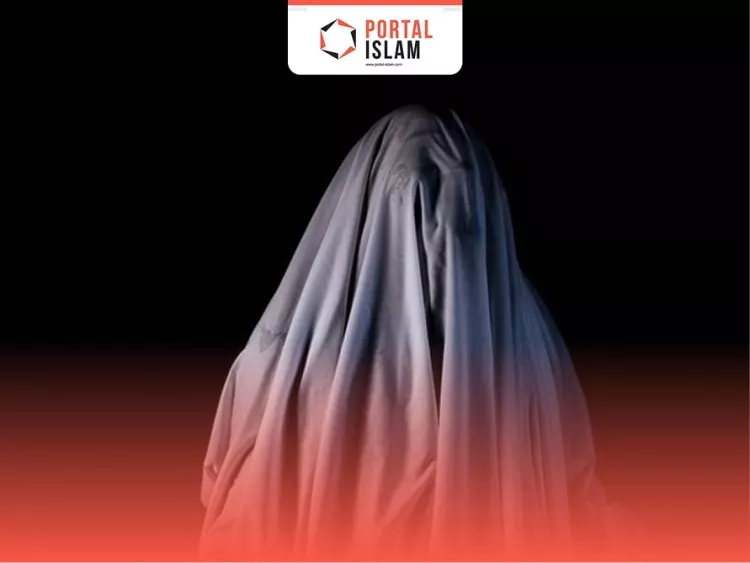
The sumpah pocong is generally understood as a sacred oath performed by wrapping the practitioner in a burial shroud like a corpse, then swearing upon the holy Qur'an to demonstrate that one is speaking the truth. If the person is proven to be lying, it is believed they will face a terrifying punishment from Allah, both in this world and the hereafter.
This oath is typically performed in the context of family conflicts, land disputes, slander, or accusations that are difficult to prove under positive law.
The Law of Oaths in Islam
1. Permissible Oaths
In Islam, swearing an oath is permitted under specific conditions and must be performed using the name of Allah. This is as stated in the Qur'an:
Do not use the name of Allah as an obstacle to doing good, being pious, and creating peace among people. Using an oath in the name of Allah to refuse to perform a good deed—such as saying, "By Allah, I will not help the orphan"—is forbidden by religion. If such an oath is uttered, it must be expiated by paying a kaffarah (atonement), which consists of one of three choices: feeding ten poor people, providing clothing for them, freeing a slave, or fasting for three days, as explained in Surah al-Ma'idah (5:89). Allah is All-Hearing of what you say and All-Knowing of what you do.
In a hadith, the Prophet Muhammad ﷺ also stated:
"Whoever swears by other than Allah has committed kufr (disbelief) or shirk (polytheism)."
Narrated by Ahmad, Abu Dawud, and al-Bayhaqi; authenticated by Ahmad Shakir in Takhrij Musnad Ahmad 7/199
Oaths in Islam are used to strengthen a statement and are typically employed in serious matters, such as testimony in court or within certain contracts.
2. The Prohibition of Swearing by Other Than Allah
Islam forbids swearing by anything other than Allah, including objects, people, or sacred places. The Prophet Muhammad ﷺ said:
"Whoever swears by other than the name of Allah has committed shirk."
Narrated by Ahmad and Abu Dawud
Sumpah Pocong: Culture or Worship?
The sumpah pocong is not part of Islamic Sharia and is not found in the teachings of the Prophet ﷺ or his Companions. It is a local tradition influenced by societal beliefs regarding spirits, death, and divine punishment.
Although it is performed by mentioning the name of Allah and using the Qur'an, the procedure of the sumpah pocong was never exemplified in Islam, thus it falls into the category of bid'ah (an innovation introduced into the religion).
Fatwas and Scholarly Opinions
The MUI (the Indonesian Ulema Council) has stated on several occasions that the sumpah pocong is not part of Islamic teachings and has no basis in the Qur'an or hadith.
Other scholars, such as Sheikh Muhammad Salih al-Munajjid, have also explained that swearing by methods not prescribed by Sharia is an act of bid'ah and must be avoided.
Negative Impacts of Sumpah Pocong
1. Damaging Aqidah (Faith)
The belief that one can be immediately afflicted with punishment for being dishonest during a sumpah pocong can create a misguided understanding of destiny and Allah's punishment. This approaches khurafat (superstition), which is forbidden in Islam.
2. Using Religion as a Theatrical Tool
Some people use the sumpah pocong as a tool for dramatization or psychological pressure rather than out of an intention of worship. This can degrade the religious significance of oaths in Islam.
3. Potential for Sin
If a person lies while taking an oath, especially when performed theatrically like the sumpah pocong, they have committed a major sin known as al-yamin al-ghamus (a false, perjured oath), which is deeply detested in Islam.
Read also: Major Sins: Accusing Without Evidence from an Islamic Perspective
Islamic Alternatives: Oaths in Sharia Courts
In the Islamic judicial system, there are oath mechanisms known as qasamah and li'an, which are conducted in cases of murder accusations without strong evidence or accusations of adultery without witnesses.
For example, in the Qur'an:
After explaining the legal provisions regarding those who accuse others of adultery, Allah outlines the law if a husband accuses his wife of adultery. For those who accuse their wives of adultery but have no witnesses other than themselves, the testimony of each person—the husband—is to swear four times by the name of Allah that he is indeed among those who speak the truth. The fifth oath is that the curse of Allah will be upon him if he is among those who lie in the accusation leveled against his wife.
Conclusion
The sumpah pocong is not a practice taught in Islam. Although it is performed in the name of Allah and uses the Qur'an, the method of its execution contradicts Sharia. Islam only recognizes oaths taken in accordance with the guidance of the Qur'an and hadith, with the correct intention, and in a context that is justified.
The Ruling on Sumpah Pocong According to Islam:
- Not valid as an act of worship
- Categorized as bid'ah
- Can mislead one's aqidah
- Has the potential to become khurafat
Closing
As Muslims, we are obligated to distinguish between local culture and pure Islamic Sharia. If there are conflicts or problems that require proof of truth, use the channels of Sharia law or positive law in the correct manner. Reintroducing the sumpah pocong is not only irrelevant but also endangers one's faith and tarnishes the sanctity of Islamic teachings.