
7 Strategies for MSMEs to Thrive in the Modern Digital Era
Discover 7 effective strategies for MSMEs to survive and grow in the modern digital era, from technology adoption and branding to halal certification.
 Portal Islam



This article was first published in Indonesian. Baca versi Bahasa Indonesia →
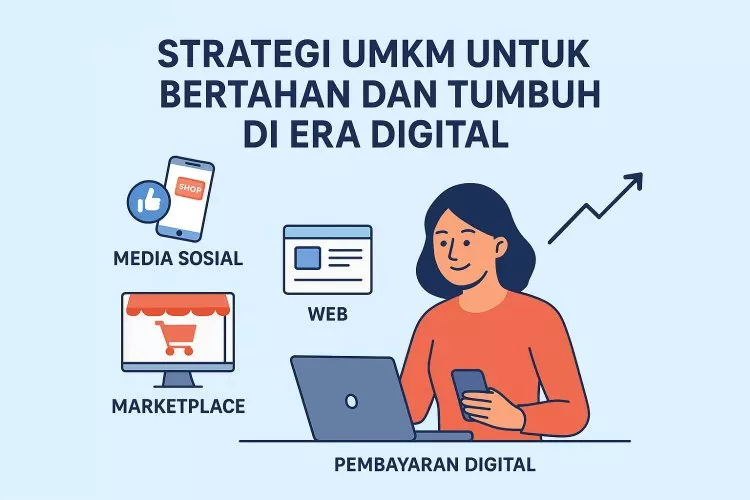
In recent years, the business world has shifted drastically due to the rapid development of technology and digitalization. This change impacts not only large corporations but also micro, small, and medium enterprises (MSMEs). Amidst increasingly fierce competition, MSMEs are required to be faster, more creative, and more adaptable. Without the ability to adapt, business owners risk falling behind competitors who are better prepared for the digital age.
Conversely, MSMEs capable of seizing digital opportunities can grow much faster, expand their markets, and increase their revenue. Here are several strategies that can be applied to survive and continue growing.
1. Leveraging Technology as the Main Foundation
Today, technology is no longer merely a support tool; it has become an essential element in running a business. Digitalization helps MSMEs save time, costs, and labor while opening up new business opportunities.
The benefits of using technology for MSMEs include:
- Reaching a broader customer base
- Reducing promotional costs
- Facilitating digital transactions
- Improving operational efficiency
Examples of technology that can be utilized:
- Point of Sale (POS) applications
- Digital financial bookkeeping
- Automated inventory management
- Chatbot-based customer service
Using technology makes business operations faster and more accurate.
2. Consistent and Attractive Branding
Branding is not just about a logo or colors; it is about how a business builds a recognizable and trusted identity.
Essential elements of branding:
- A simple yet strong logo
- Consistent identity colors
- A tagline reflecting business values
- An authentic and relevant brand story
A strong brand builds trust and makes products stand out from competitors.
3. Product Innovation That Answers Consumer Needs
Today's consumers tend to look for products that offer added value. Therefore, MSMEs need to continuously innovate their products and services.
Examples of innovation:
- New product variations
- Attractive packaging
- Eco-friendly products
- Custom order services
Even simple innovations can increase appeal without requiring large capital.
4. Orderly and Structured Financial Management
A common mistake among MSMEs is a lack of neat financial record-keeping. Yet, financial management serves as the foundation for making business decisions.
The benefits of good financial management:
- More accurate pricing
- Clear visibility of profit and loss
- Cash flow control
- Support for capital planning
Using bookkeeping applications can help make recording easier and more accurate.
5. Building Good Customer Relationships
Customers are a vital asset for MSMEs. Loyal customers typically provide more stable growth.
Ways to maintain customer relationships:
- Prompt responses to messages
- Friendly service
- Loyalty programs such as points or vouchers
- Gathering customer feedback
Satisfied customers can become natural promoters for the business.
6. Rapid Adaptation to Market Changes
The market is constantly changing, making adaptability the key to business sustainability.
Actions to take:
- Following the latest trends
- Mastering digital skills
- Monitoring competitors
- Testing various marketing strategies to find the most effective one
Flexibility is an advantage for MSMEs in making swift decisions.
7. Regulatory Compliance and Halal Certification as Added Value
In the digital era, consumers pay increasing attention to the safety, quality, and halal status of products. For MSMEs operating in food, beverages, cosmetics, and other consumer goods, holding a Halal Certificate is not only a regulatory obligation but also a vital strategy to win the market.
Benefits of a Halal Certificate for MSMEs:
- Increasing consumer trust, especially in Indonesia where the majority of the population is Muslim.
- Expanding market share, including export opportunities to countries requiring halal standards.
- Enhancing product selling value due to guaranteed quality and safety.
- Providing a competitive advantage in marketplaces and online stores.
- Meeting government regulations, particularly the phased mandatory halal certification requirements.
Steps to obtain a Halal Certificate for MSMEs:
- Applying through the SiHalal platform (BPJPH), Indonesia's Halal Product Assurance Organizing Agency.
- Preparing a list of raw materials, production flow, and business documents.
- Choosing the Self Declare scheme (free for certain MSMEs) or the Regular scheme.
- Undergoing document verification and waiting for certificate issuance.
By holding a Halal Certificate, MSMEs can provide peace of mind to customers, strengthen their business image, and become better prepared to face competition in the digital market.
Conclusion
Amidst rapid technological developments and shifting consumer behavior, MSMEs are required to be more adaptive and innovative to survive and continue growing. The utilization of technology, strengthening of branding, product innovation, orderly financial management, and the ability to build good customer relationships form the essential foundation for facing competition in the digital era. Furthermore, compliance with regulations, including possessing a Halal Certificate, serves as an added value that can boost trust and expand market share.
By consistently implementing these strategies, MSMEs will not only be able to compete but also possess the potential to grow more rapidly and seize new opportunities within the continuously evolving digital ecosystem. The future of MSMEs will be brighter if business owners dare to change, keep learning, and leverage technological advancements as part of their business journey.