Dua After Prayer: Authentic Supplications From the Sunnah
Discover the virtues and authentic post-prayer supplications from the Qur'an and Sunnah. Learn how to seek forgiveness, perform dhikr, and offer du'a.
 Portal Islam



This article was first published in Indonesian. Baca versi Bahasa Indonesia →
Introduction
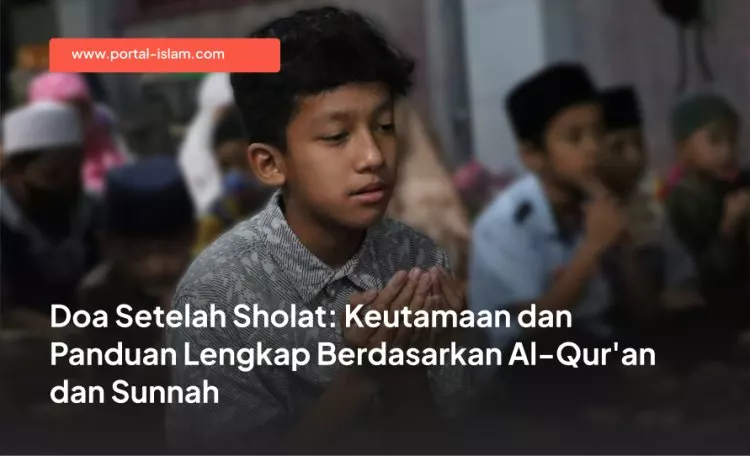
Supplicating after obligatory prayer (salah) is a blessed opportunity to beseech Allah. The Prophet Muhammad ﷺ encouraged Muslims to supplicate frequently during these moments because Allah opens the doors of His mercy to those who call upon Him. This article explores the virtues of post-prayer du'a, recommended sunnah supplications, and their authentic textual proofs.
The Virtues of Supplication After Prayer
- A Time of Acceptance
The period immediately following prescribed prayers is among the most auspicious times for du'a. The Prophet ﷺ said:
"Supplication is worship."
Narrated by at-Tirmidhi, no. 3372
- Drawing Nearer to Allah
Du'a serves as direct communication between a servant and Allah. Allah says in the Qur'an:
"And when My servants ask you concerning Me, indeed I am near. I respond to the invocation of the supplicant when he calls upon Me."
Surah al-Baqarah, 2:186
- Expiation of Sins and Increased Reward
Engaging in dhikr (remembrance of Allah) and du'a after completing salah helps expiate sins and draws a Muslim closer to Paradise.
Recommended Supplications After Prayer
1. Istighfar (Seeking Forgiveness)
The Prophet ﷺ would immediately begin his post-prayer remembrance by seeking forgiveness three times:
"Astaghfirullah" (3 times)
(Meaning: I seek forgiveness from Allah.)
2. Ayat al-Kursi
The Prophet ﷺ highlighted the great reward of reciting the Verse of the Throne after prayer:
"Whoever recites Ayat al-Kursi after every prescribed prayer, nothing stands between him and entering Paradise except death."
Narrated by an-Nasa'i, no. 990
Ayat al-Kursi begins with:
"Allahu laa ilaaha illa Huwa, Al-Hayyul Qayyum..."
Surah al-Baqarah, 2:255
3. Subhanallah, Alhamdulillah, Allahu Akbar
After completing salah, the Prophet ﷺ taught his followers to recite:
- Subhanallah (Glory be to Allah) — 33 times
- Alhamdulillah (Praise be to Allah) — 33 times
- Allahu Akbar (Allah is the Greatest) — 33 times
To complete the hundredth phrase, recite:
"Laa ilaaha illallah wahdahu laa syarikalah, lahul mulku walahul hamdu wahuwa 'alaa kulli syai'in qadiir."
Narrated by Muslim, no. 597
(Meaning: There is no deity worthy of worship except Allah alone, without partner. To Him belongs sovereignty and to Him belongs all praise, and He has power over all things.)
4. Supplication Taught by the Prophet ﷺ
The Prophet ﷺ regularly recited this beautiful invocation:
"Allahumma a'inni 'ala dzikrika wa syukrika wa husni 'ibadatik."
Narrated by Abu Dawud, no. 1522
(Meaning: O Allah, help me to remember You, to thank You, and to worship You in the best manner.)
5. Comprehensive Personal Du'a
Following the recommended dhikr, a worshipper may ask Allah for any good in this life and the next. A standard comprehensive du'a from the Qur'an is:
"Rabbanaa aatinaa fiddunya hasanah, wa fil aakhirati hasanah wa qinaa 'adzaaban naar."
Surah al-Baqarah, 2:201
(Meaning: Our Lord, give us in this world that which is good and in the Hereafter that which is good and protect us from the punishment of the Fire.)
Practical Guide to Post-Prayer Devotions
-
Begin with Istighfar and Ayat al-Kursi
These initial recitations purify the heart and orient the mind toward divine worship. -
Recite Sunnah Tasbih and Dhikr
Incorporate the prescribed phrases taught by the Prophet ﷺ to earn abundant spiritual rewards. -
Conclude with Personal Invocations
Present your heartfelt petitions to Allah—for yourself, your family, and the wider ummah.
Spiritual Wisdom of Post-Prayer Du'a
-
Establishes a Blessed Habit
Remaining seated to remember Allah after prayer reinforces consistency in divine remembrance. -
Deepens Gratitude and Humility
Supplication reminds worshippers of their human weakness and dependence on Allah's grace. -
Instills Inner Tranquility
Placing one's cares completely in Allah's hands brings profound peace of mind.
Conclusion
Supplicating after prayer is a precious opportunity to draw near to Allah. By adhering to the guidance contained within the Qur'an and Sunnah, our du'a becomes more meaningful and spiritually enriching. Let us maximize these moments to seek forgiveness, express gratitude, and ask for ultimate success in both worlds.
May Allah count us among those who remain steadfast in supplication and grant us His enduring blessings.