Trump, Xi, and Putin to Discuss Nuclear Arms at APEC Summit
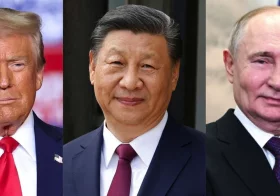
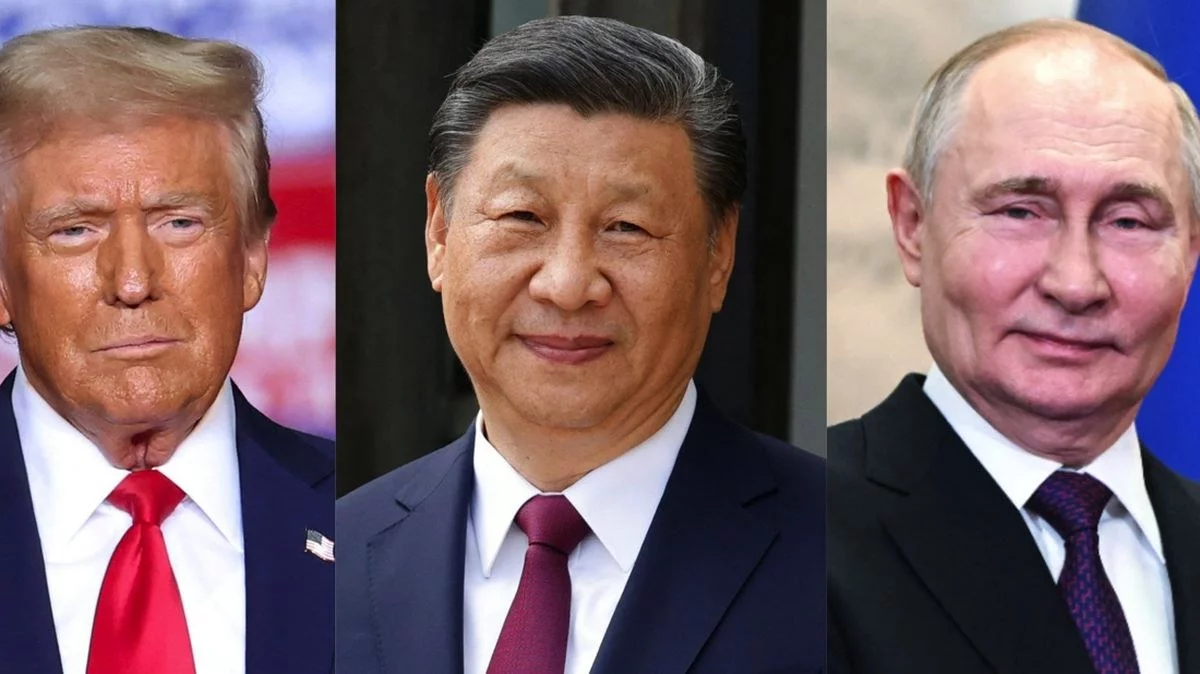
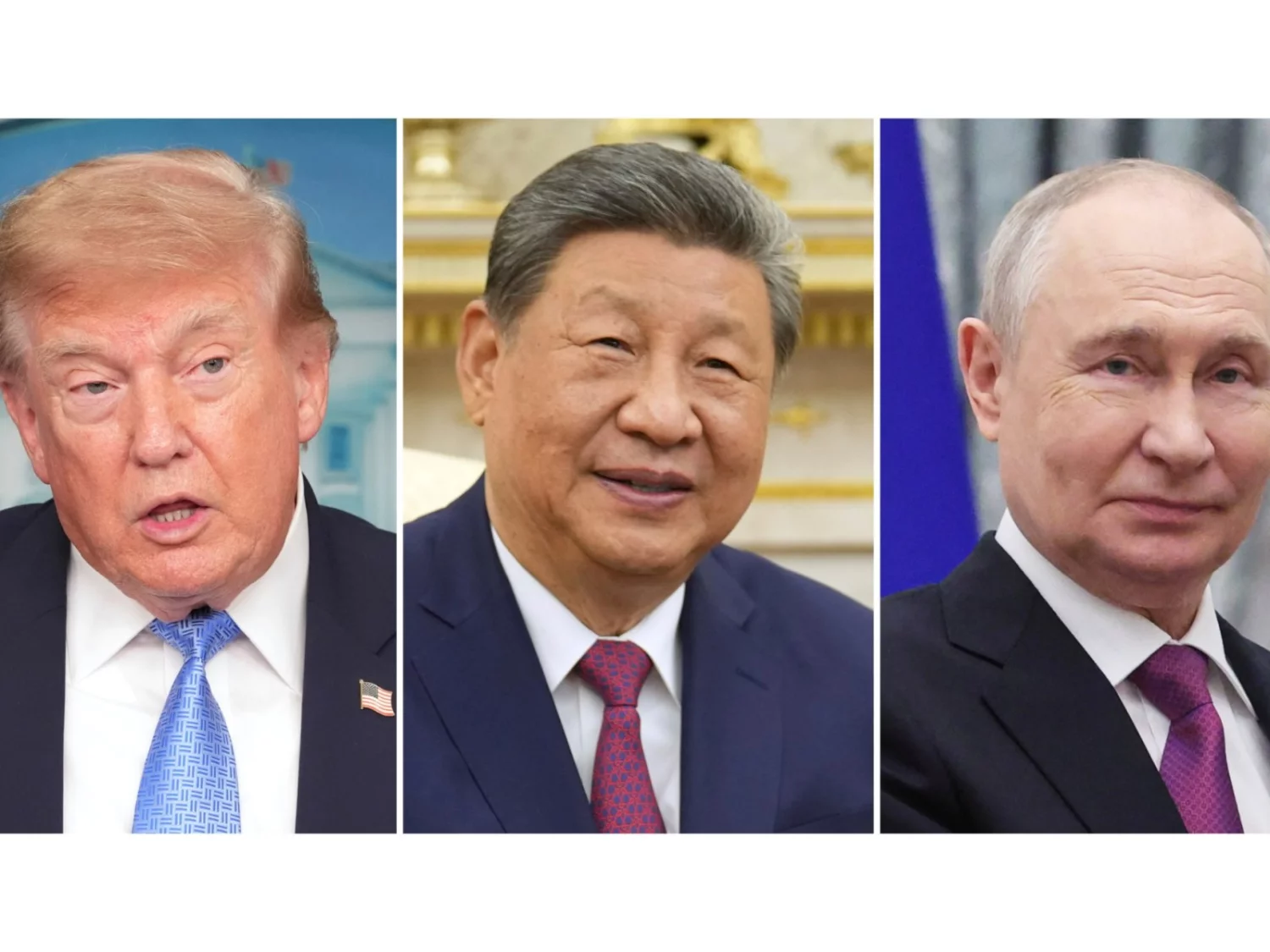
Donald Trump, Xi Jinping, and Vladimir Putin are scheduled to hold a trilateral summit at APEC in Shenzhen to discuss global nuclear arms control.
 Portal Islam



This article was first published in Indonesian. Baca versi Bahasa Indonesia →
SHENZHEN — The leaders of three major global powers—US President Donald Trump, Chinese President Xi Jinping, and Russian President Vladimir Putin—are scheduled to hold a historic trilateral summit on the sidelines of the 33rd APEC Summit in Shenzhen, China, on Thursday (19/11/2026). The high-stakes meeting will focus primarily on global nuclear arms control and regional geopolitical developments.
Confirmation of the planned summit came from White House Press Secretary Olivia Wales. As reported by CNN Indonesia on Friday (13/11/2026), Wales explained that the meeting was initiated out of deep concern regarding the proliferation of weapons of mass destruction. According to Al Jazeera, a White House assistant press secretary also confirmed that these rare talks between the three world leaders were arranged alongside the APEC economic forum in China's major technology hub.
Nuclear Arms Limitation and Differing Treaty Accounts
Citing CNN Indonesia, Olivia Wales outlined President Trump's perspective on the urgency of the Shenzhen gathering. "He [Trump] will discuss nuclear arms control in the world, which President Trump believes proliferation is very dangerous," Wales stated during a telephone call, as reported by Reuters on Friday (13/11/2026).
According to Al Jazeera, these discussions follow the expiration of the last remaining nuclear arms limitation treaty between Washington and Moscow, the New Strategic Arms Reduction Treaty (New START). Al Jazeera reported that New START expired nine months ago in February, leaving the strategic nuclear arsenals of the world's two largest nuclear-armed states unconstrained by capped limits for the first time in over 50 years.
Media reports reflect slight discrepancies regarding the exact timeline of the treaty. While Al Jazeera noted that New START expired in February after Donald Trump rejected a Russian proposal to extend it for one year while demanding a broader deal that includes China, reports citing CNN Indonesia stated that the New START agreement between the US and Russia is set to expire this year.
Data from the Stockholm International Peace Research Institute, cited by both CNN Indonesia and Al Jazeera, indicates that Russia currently maintains the world's largest inventory of nuclear warheads, followed by the United States in second place and China in third.
China's Position and Expectations for the Talks
The push to put nuclear arms control on the agenda comes amid complex diplomatic dynamics. According to CNN Indonesia, Trump's repeated demands for trilateral nuclear talks had previously drawn frustration from Beijing. For years, China has declined direct involvement in three-way nuclear negotiations, arguing that the US and Russia—possessing vastly larger nuclear stockpiles—should continue discussions on a bilateral basis.
Despite the high-level nature of the scheduled gathering, US officials have tempered expectations regarding concrete outcomes. According to reports from Al Jazeera and CNN Indonesia, an unnamed senior Trump administration official expressed caution about what the meeting might achieve.
"We don't expect to reach any kind of agreement," the senior Trump administration official told Reuters, as quoted by CNN Indonesia.
The official acknowledged that nuclear matters remain delicate and complex for Beijing, but emphasized that Washington believes it is time for China to play a broader role alongside leading global powers. "This is the beginning of a conversation that we hope will yield something useful down the road," the official added.
Trump's Itinerary and the Conflict in the Middle East
To attend the APEC Summit and related diplomatic engagements in Asia, President Trump is scheduled to depart on Monday (16/11/2026) for a four-day tour. In addition to China, Trump is set to visit the Philippines. However, US officials confirmed that Trump is not expected to meet with North Korean leader Kim Jong Un during the trip.
During the summit in Shenzhen, several other global security issues are expected to surface. According to Reuters reports cited by CNN Indonesia and Al Jazeera, Trump plans to address the military conflict involving the US, Israel, and Iran. However, Trump will definitely not discuss Russia's ongoing war in Ukraine.
A senior US official explained the rationale for omitting Ukraine from the trilateral discussion, as reported by CNN Indonesia:
"We've had a lot of meetings recently with Russia, but China hasn't really been involved in that process. So it didn't feel appropriate to bring up Ukraine in this meeting," the Trump administration official stated.
Media reports also indicate that Trump is not anticipated to hold a separate one-on-one bilateral meeting with Putin, nor will he raise the issue of Ukraine's access to SpaceX's Starlink satellite network. Tech entrepreneur Elon Musk is set to accompany the US delegation to China, though senior US officials confirmed Musk will not be present inside the meeting room with Xi Jinping and Putin.
International Reactions and Historical Parallels
The announcement of the trilateral summit has sparked widespread commentary among international observers. According to Al Jazeera, some analysts have drawn comparisons between the upcoming Shenzhen meeting and the historic 1945 Yalta Conference, where leaders of the United States, Great Britain, and the Soviet Union convened to outline the post-World War II global order.
However, Kremlin spokesperson Dmitry Peskov dismissed such historical comparisons. As reported by Al Jazeera, Peskov stressed that any understanding reached in Shenzhen could not be unilaterally imposed on third nations, while nevertheless acknowledging that the upcoming summit is "highly significant."
Meanwhile, Ukrainian President Volodymyr Zelenskyy expressed concern that trilateral discussions without Kyiv's direct representation could be used to deliberate on matters impacting Ukraine's interests.
An Islamic Perspective: Preserving Peace and Preventing Global Harm
As a media outlet committed to moderate Islamic values and constructive global dialogue, Portal Islam views genuine efforts to reduce or limit weapons of mass destruction as a vital imperative for human survival. In Islamic jurisprudence, weapons of mass destruction that cause indiscriminate devastation run contrary to the fundamental principles of *maqasid al-shari'ah*, which place the preservation of human life (*hifzh al-nafs*) and the stewardship of the Earth at their core.
Islam continuously calls upon humanity to prioritize peace and prevent destruction across the globe. Allah reminds believers in the Qur'an regarding the sanctity of life and the prohibition of causing corruption on Earth:
وَاِذَا تَوَلّٰى سَعٰى فِى الْاَرْضِ لِيُفْسِدَ فِيْهَا وَيُهْلِكَ الْحَرْثَ وَالنَّسْلَ ۗ وَ اللّٰهُ لَا يُحِبُّ الْفَسَادَ ﴿٢٠٥﴾
And when he goes away, he strives throughout the land to cause corruption therein and destroy crops and animals. And Allah does not like corruption.
Qur'an, Surah Al-Baqara [2]: 205 (Sahih International)
It is hoped that diplomatic initiatives aimed at curbing mass destruction weapons will transcend political posturing and deliver real security to people worldwide—including across the Muslim world, which remains deeply committed to a just, lasting, and civilized peace.