Native Animals of Indonesia: Diversity, Habitats, and Conservation
Explore Indonesia's native and endemic wildlife, from the Komodo dragon to the Sumatran tiger, their habitats, ecological roles, and conservation efforts.
 ikhsanmuh



This article was first published in Indonesian. Baca versi Bahasa Indonesia →
Native Animals of Indonesia
Indonesia is one of the countries with the largest biodiversity in the world. Situated between the continents of Asia and Australia and flanked by the Indian and Pacific Oceans, Indonesia possesses a geographical and tropical climate condition that supports the life of various types of flora and fauna.
One of Indonesia's most proud natural wealths is the presence of endemic animals, which are animals naturally found only in certain regions. These animals possess different body shapes, characteristics, behaviors, and adaptation abilities suited to their living environments.
Starting from the Komodo dragon, which is the largest lizard in the world, orangutans with high intelligence, the Sumatran tiger serving as an important predator in the forests, to the bird-of-paradise famous for the beauty of its plumage. All these animals become an essential part of Indonesia's identity and natural wealth.
However, the existence of various native Indonesian wildlife currently faces threats such as habitat destruction, poaching, illegal wildlife trade, and climate change. Therefore, it is important for the public to get to know, understand, and participate in preserving native Indonesian animals so they do not face extinction.
1. Definition of Native Indonesian Animals
Native Indonesian animals are groups of animals that naturally live and breed within Indonesian territory. These animals can be found in various ecosystems, such as tropical rainforests, mountains, rivers, swamps, grasslands, and marine areas.
Native Indonesian animals can be divided into two main groups:
-
Endemic animals: Animals whose natural distribution is limited to certain regions and are not naturally found elsewhere.
-
Native or local fauna: Animals originating from Indonesian territory, but whose distribution may encompass other countries.
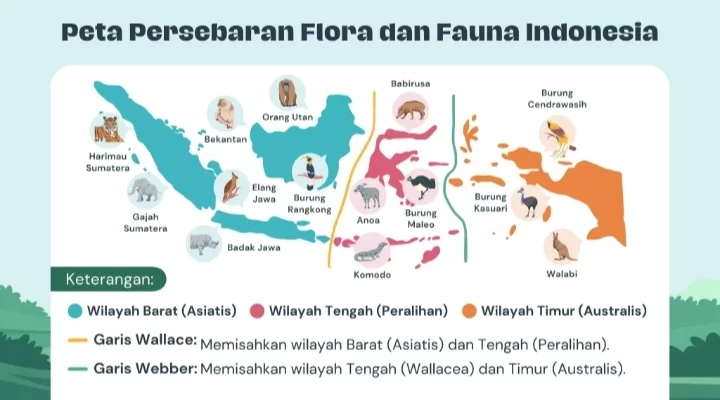
Indonesia has three fauna distribution groups based on its geographical regions, namely Asian fauna, Transitional (Wallacea) fauna, and Australian fauna.
2. Types of Native Indonesian Animals
Here are several native Indonesian animals famous for their uniqueness, characteristics, and vital roles in the ecosystem.
1. Komodo Dragon

Scientific name: Varanus komodoensis
Region of origin: East Nusa Tenggara
Habitat: Komodo Island, Rinca, Flores, Gili Motang, and Gili Dasami.
The Komodo dragon is one of the most famous animals from Indonesia. This animal is known as the largest living lizard in the world. The Komodo dragon has a large body, a long tail, scaly skin, and strong legs for moving on land.
The Komodo dragon is a carnivore or meat-eater. Its diet includes deer, wild boars, and other animals. The Komodo dragon possesses an excellent sense of smell to locate food sources.
The existence of the Komodo dragon became one of the main reasons for the establishment of Komodo National Park. This animal is an endemic Indonesian wildlife species whose preservation must be maintained due to its very high ecological value and uniqueness.
2. Orangutan

Scientific name: Pongo spp.
Region of origin: Sumatra and Kalimantan
Habitat: Tropical rainforests, especially dense tree canopy areas.
Orangutans are large primates closely related to humans. These animals are famous for their intelligence, ability to use simple tools, and engaging behavior.
Indonesia has three species of orangutans: the Sumatran orangutan, the Bornean orangutan, and the Tapanuli orangutan. All three have different characteristics and distribution areas.
Orangutans spend most of their time in trees. Their primary diet consists of fruits, leaves, bark, and various other plant parts.
Orangutans play an important role in maintaining forest balance. When eating fruits and dispersing seeds, orangutans help the plant regeneration process in forest areas.
3. Sumatran Tiger

Scientific name: Panthera tigris sumatrae
Region of origin: Sumatra Island
Habitat: Tropical forests, mountain forests, and lowland forest areas.
The Sumatran tiger is the only tiger subspecies still living naturally in Indonesia. This animal has a strong body, orange fur with black stripes, and excellent hunting skills.
The Sumatran tiger is an apex predator in the food chain. Its main prey includes deer and wild boars. The presence of tigers helps control the population of their prey so that ecosystem balance is maintained.
Unfortunately, the Sumatran tiger faces serious threats due to forest destruction, shrinking habitat, and illegal hunting. Therefore, forest area protection is one of the crucial steps to ensure its survival.
4. Anoa

Scientific name: Bubalus depressicornis and Bubalus quarlesi
Region of origin: Sulawesi
Habitat: Tropical forests, mountainous regions, and lowland forests.
The anoa is an endemic animal of Sulawesi belonging to the wild cattle family. Its body shape resembles a water buffalo, but smaller in size. The anoa has short horns and a relatively stocky body.
There are two types of anoas: the lowland anoa and the mountain anoa. Both live in forest environments and tend to avoid human activity.
The anoa is an herbivorous animal that eats grass, leaves, shoots, and various other plants. This animal plays a role in maintaining ecosystem balance through foraging activities and interacting with the forest environment.
The anoa population faces threats due to forest clearing and hunting. Therefore, preserving its natural habitat is highly necessary.
5. Bird-of-Paradise (Cenderawasih)

Scientific name: Various species within the family Paradisaeidae
Region of origin: Papua and surrounding areas
Habitat: Tropical rainforests, especially lowland forests.
The bird-of-paradise is known as one of the most beautiful birds in the world. This animal has brightly colored feathers with unique shapes, especially in males.
Male birds-of-paradise exhibit specific courtship behaviors to attract females, performing dancing movements while showcasing the beauty of their plumage. Each species has different feather colors and shapes.
The diet of the bird-of-paradise includes fruits, insects, and other small animals. Some species also help disperse plant seeds through fruit-eating activities.
This bird is a symbol of Papua's natural wealth and an important part of Indonesia's biodiversity.
6. Javan Rhinoceros

Scientific name: Rhinoceros sondaicus
Region of origin: Java Island
Habitat: Tropical forests and lowland forest areas, especially Ujung Kulon National Park.
The Javan rhinoceros is one of the rarest mammals in the world. This animal has thick skin with folds resembling armor. Unlike the African rhinoceros, the Javan rhino generally has only a single, relatively small horn.
The Javan rhino is a herbivore that feeds on leaves, twigs, shoots, and various forest plants. These animals usually live solitarily and require a vast habitat to forage and breed.
Currently, the presence of the Javan rhinoceros is extremely limited, and most of its population is known to reside only in Ujung Kulon National Park. Habitat protection and population monitoring are vital to prevent its extinction.
7. Proboscis Monkey (Bekantan)

Scientific name: Nasalis larvatus
Region of origin: Kalimantan
Habitat: Mangrove forests, swamp forests, and riparian forests along rivers.
The proboscis monkey is a primate characterized by a long and large nose, especially in males. Because of its unique nose shape, the proboscis monkey is often nicknamed the Dutch monkey locally.
Proboscis monkeys are skilled swimmers and are often found around rivers and mangrove areas. Their main diet consists of leaves, fruits, and other plant parts.
This animal plays a role in maintaining forest ecosystem balance. However, the destruction of mangrove and swamp forest areas increasingly threatens the proboscis monkey's habitat.
8. Babirusa

Scientific name: Babyrousa celebensis
Region of origin: Sulawesi
Habitat: Tropical forests, swamps, and humid forest areas.
The babirusa is an endemic Indonesian animal with a very unique appearance. It belongs to the wild pig family, but features distinctive upper tusks in males that grow upward and curve back toward the forehead.
The name babirusa comes from a combination of the words "babi" (pig) and "rusa" (deer). Despite the name, the babirusa is biologically closer to the pig family than to deer.
Babirusas eat fruits, leaves, roots, and various types of plants. This animal also contributes to the forest ecosystem through its foraging activities.
The main threats to the babirusa are habitat destruction and hunting. Protecting the forests of Sulawesi is an important effort to maintain the existence of this wildlife.
9. Maleo Bird

Scientific name: Macrocephalon maleo
Region of origin: Sulawesi
Habitat: Tropical forests and sandy coastal areas with solar or geothermal heat.
The maleo bird is an endemic bird of Sulawesi with a breeding method distinct from most other birds.
Maleos utilize natural heat from sunlight or geothermal sources to help incubate their eggs. The bird buries its eggs in sand or soil with the appropriate temperature.
Once hatched, maleo chicks are capable of digging their way out of the soil and finding their way to the surface without parental assistance.
The maleo's diet consists of seeds, fruits, and various small animals. The uniqueness of its breeding process makes the maleo one of the most fascinating animals in Indonesia.
10. Bali Starling (Jalak Bali)

Scientific name: Leucopsar rothschildi
Region of origin: Bali
Habitat: Monsoon forests and lowland forest areas in Bali.
The Bali starling is an endemic bird of Bali Island famous for its pristine white plumage, a characteristic crest on its head, and blue skin around its eyes.
This bird has a varied vocalization and often lives in small groups. Its diet consists of fruits, insects, and various small animals.
The Bali starling is an animal in critical need of protection because its population previously experienced a drastic decline due to poaching and illegal trade.
Captive breeding programs, planned releases into the wild, and habitat protection are important parts of conserving this bird.
11. Sumatran Elephant

Scientific name: Elephas maximus sumatranus
Region of origin: Sumatra
Habitat: Tropical forests, lowland forests, and hilly regions.
The Sumatran elephant is one of the largest mammals living in Indonesia. This animal possesses a long trunk used for gathering food, drinking, communicating, and performing various other activities.
Elephants are herbivores that eat grass, leaves, fruits, and bark. Elephants also play an important role in the ecosystem by helping disperse plant seeds through their dung.
Threats to the Sumatran elephant include habitat shrinkage, human-wildlife conflict, and poaching. Therefore, forest protection and the management of areas serving as elephant migration corridors are highly necessary.
12. Tarsier

Scientific name: Tarsius spp.
Region of origin: Sulawesi and several other Indonesian regions
Habitat: Tropical forests, shrublands, and arboreal areas.
The tarsier is a small primate famous for having very large eyes compared to its body size. These eyes help it see in low-light conditions.
Tarsiers are nocturnal animals, meaning they are more active at night. Their diet primarily consists of insects and other small animals.
This animal has exceptional leaping abilities aided by its long hind legs. Tarsiers typically live among trees and forage during the night.
The existence of the tarsier is evidence of the uniqueness of Sulawesi's fauna, which features many distinctive species.
3. Distribution of Native Indonesian Animals
Indonesia's animal diversity is not evenly distributed. Each region has different fauna characteristics influenced by geological history, geographical conditions, climate, and habitat types.

Generally, the distribution of Indonesian fauna is divided into three main regions.
A. Western Indonesia Region (Asian/Asiatis)
This region includes Sumatra, Java, Kalimantan, and Bali. Its animal species share many similarities with Asian fauna.
Examples of animals:
-
Sumatran tiger.
-
Sumatran elephant.
-
Orangutan.
-
Javan rhinoceros.
-
Proboscis monkey.
-
Bali starling.
B. Central Indonesia Region (Transitional/Wallacea)
This region includes Sulawesi, Nusa Tenggara, and parts of Maluku. This area features many endemic animals not naturally found in other regions.
Examples of animals:
-
Komodo dragon.
-
Anoa.
-
Babirusa.
-
Maleo bird.
-
Tarsier.
C. Eastern Indonesia Region (Australian/Australis)
This region primarily includes Papua and surrounding islands. Its fauna shares similarities with animals living in Australia and surrounding regions.
Examples of animals:
-
Bird-of-paradise.
-
Cassowary.
-
Tree kangaroo.
-
Cuscus.
-
Cockatoo.
4. Factors Causing Animal Diversity in Indonesia
The high diversity of animals in Indonesia is caused by several of the following factors.
-
Tropical climate: Indonesia receives sunlight and rainfall that support the growth of various types of plants as a food source for animals.
-
Archipelagic region: The large number of islands causes a number of animal populations to develop separately, producing species with specific characteristics.
-
Habitat diversity: Indonesia features tropical rainforests, mountains, swamps, mangroves, rivers, and marine ecosystems.
-
Geological history: Differences in island formation history and past land connections affect the distribution and development of fauna.
-
Availability of food sources: Various types of plants and animals support the lives of diverse wildlife groups.
5. Threats to the Preservation of Native Indonesian Animals


Although Indonesia possesses vast fauna wealth, the existence of these animals faces various threats.
1. Habitat destruction
Land clearing, logging, development, and forest fires reduce the living spaces and food sources of wildlife.
2. Poaching
Uncontrolled hunting can cause a decline in animal populations, especially species whose individual numbers are already small.
3. Illegal wildlife trade
Illegal animal trade can disrupt the survival of certain species, particularly birds and mammals with high economic value.
4. Climate change
Changes in temperature and rainfall patterns can affect habitat conditions, food availability, and the breeding success of various wildlife.
5. Human-wildlife conflict
Changes in land use can cause human activity areas to get closer to wild animal habitats. This condition has the potential to trigger conflicts, for example between elephants and communities around forest areas.
6. Efforts to Preserve Native Indonesian Animals
The preservation of native Indonesian animals is a shared responsibility among the government, the community, conservation institutions, and the younger generation.
Several efforts that can be made include:
-
Protecting natural habitats: Safeguarding forests, mangrove areas, rivers, and other ecosystems so they remain suitable living spaces for wildlife.
-
Establishing conservation areas: Protecting wildlife through national parks, nature reserves, and wildlife sanctuaries.
-
Stopping illegal poaching: Supporting law enforcement against hunting and animal trade that violates regulations.
-
Conducting captive breeding: Developing responsible breeding programs for certain species to support conservation.
-
Enhancing environmental education: Providing knowledge to the public regarding the importance of maintaining biodiversity.
-
Conducting forest rehabilitation: Restoring damaged forest areas so they can once again become wildlife habitats.
-
Developing research: Studying wildlife populations, behaviors, and habitat needs as a basis for conservation decision-making.
7. The Role of Animals in Maintaining Ecosystem Balance
Native Indonesian animals are not only natural wealth but also have an essential function in maintaining environmental balance.
Here are several important roles of animals in the ecosystem:
-
Maintaining the food chain: Predators like tigers help control the population of their prey animals.
-
Dispersing plant seeds: Orangutans and various bird species help disperse seeds through fruit-eating activities.
-
Maintaining soil fertility: Elephants and other animals assist the natural nutrient cycling process through foraging and dung.
-
Controlling insect populations: Tarsiers and various insectivorous birds help control insect numbers in nature.
-
Maintaining environmental balance: Each species has a specific role interconnected with other organisms.
If any animal species becomes extinct, ecosystem balance can be disrupted. Therefore, the existence of every species needs to be maintained.
8. The Importance of Knowing Native Indonesian Animals for the Younger Generation
Knowing native Indonesian animals is a form of care for natural wealth and the environment. The younger generation plays an important role in safeguarding wildlife preservation through knowledge, awareness, and simple actions.
One way that can be done is by studying various types of animals, knowing their habitats, and understanding the threats they face.
Additionally, the younger generation can help spread information regarding the importance of wildlife conservation through social media, educational activities, and environmental campaigns.
With early awareness, it is hoped that the Indonesian public will increasingly appreciate the existence of wildlife and refrain from actions that could damage habitats or threaten animal life.
Conclusion
Indonesia is a country possessing extraordinary fauna wealth with various animal species distributed from Sumatra to Papua. Animals such as the Komodo dragon, orangutan, Sumatran tiger, anoa, bird-of-paradise, Javan rhinoceros, proboscis monkey, babirusa, maleo, and various other wildlife are essential parts of Indonesia's biodiversity.
Every animal has different characteristics, habitats, and roles in maintaining ecosystem balance. Their existence also demonstrates how diverse Indonesia's natural and environmental conditions are.
However, various threats such as habitat destruction, poaching, illegal trade, and climate change can endanger the survival of these wildlife species.
Therefore, the preservation of native Indonesian animals must become a shared concern. The government, the community, and the younger generation need to work together to protect habitats, safeguard wildlife, and raise awareness regarding the importance of biodiversity.
Protecting native Indonesian animals means safeguarding natural wealth, ecosystem balance, and a heritage for future generations.
Bibliography and References
Here are several sources that can be used to deepen information regarding native Indonesian animals: