Understanding Surah Al-Lail: Lessons on Life and Choice
Explore a comprehensive tafsir of Surah Al-Lail. Discover its key themes, scholars' insights, rhetorical beauty, and practical lessons for daily life.
 Portal Islam



This article was first published in Indonesian. Baca versi Bahasa Indonesia →
Framing Life Through the Contrast of Night and Day
Surah Al-Lail is one of the profound chapters of the Qur'an that teaches us about the stark difference between human deeds and their ultimate consequences. It presents a deep contrast between opposing human character traits, offering the promise of divine reward for good actions and a clear warning for those who turn away from righteousness.
1. Main Theme and Structure of the Surah
The Contrast Between Night and Day
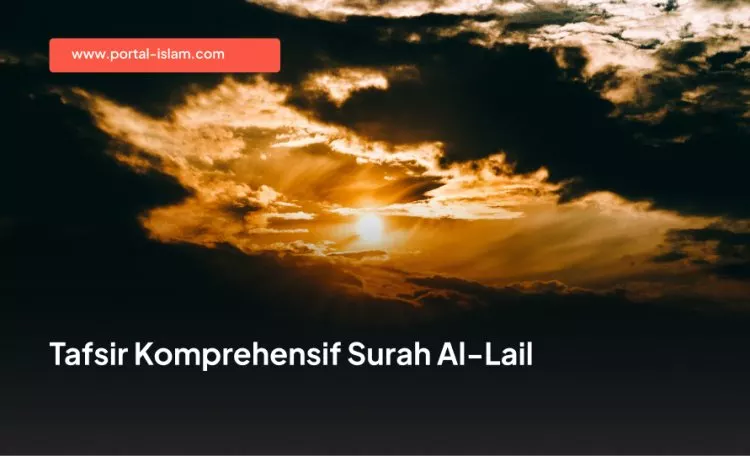
Surah Al-Lail opens with oaths sworn by Allah by the night and the day, reflecting the varied conditions of human existence. Night symbolizes tranquility and darkness, while day represents brightness and purposeful activity.
Verses 1–2:
وَاللَّيْلِ إِذَا يَغْشَىٰ وَالنَّهَارِ إِذَا تَجَلَّىٰ
“By the night when it covers, and by the day when it appears.” (Surah Al-Lail: 1–2)
These opening verses remind us that human life continually moves through cycles of light and dark, hardship and ease. Just as day and night alternate in nature, our daily lives are filled with alternating challenges and opportunities.
Righteous Deeds and Their Outcomes
The surah goes on to portray two distinct types of people: those who readily perform good deeds and those who withhold. The righteous are granted divine ease, whereas the greedy and arrogant face hardship.
Verses 5–7:
فَأَمَّا مَنْ أَعْطَىٰ وَٱتَّقَىٰ وَصَدَّقَ بِٱلْحُسْنَىٰ فَسَنُيَسِّرُهُۥ لِلْيُسْرَىٰ
“As for he who gives and fears Allah, and believes in the best reward, We will ease him toward ease.” (Surah Al-Lail: 5–7)
Human Traits
Surah Al-Lail also clarifies fundamental human tendencies. Some individuals give sincerely of their wealth and effort, while others remain miserly, self-satisfied, and arrogant.
Verses 8–10:
وَأَمَّا مَنۢ بَخِلَ وَٱسْتَغْنَىٰ وَكَذَّبَ بِٱلْحُسْنَىٰ فَسَنُيَسِّرُهُۥ لِلْعُسْرَىٰ
“But as for he who is stingy and considers himself free of need, and denies the best reward, We will ease him toward difficulty.” (Surah Al-Lail: 8–10)
Those driven by greed and indifference toward good works will find their path fraught with difficulty. This serves as a timeless warning that miserliness and worldly obsession lead only to hardship in both this life and the Hereafter.
Structural Flow
Structurally, Surah Al-Lail is arranged in a clear, systematic order. It begins with divine oaths before laying out two contrasting ways of life: smooth ease for those who practice goodness, and increasing difficulty for those who choose arrogance.
2. Key Terms and Verse Analysis
Linguistic Insights
This surah relies on key vocabulary that illuminates its core message:
- لَيْلٍ (Lail): Night, symbolizing darkness, rest, and tranquility.
- نَهَارٍ (Nahar): Day, symbolizing light and active engagement with life.
- زَكَّىٰهَا (Zakkaha): Purifying the soul by cleansing it of wrongdoing and sin.
- دَسَّاهَا (Dassaha): Corrupting the soul by covering it in sin and transgression.
Verses 9–10:
وَأَمَّا مَنۢ بَخِلَ وَٱسْتَغْنَىٰ وَكَذَّبَ بِٱلْحُسْنَىٰ
“But as for he who is stingy and considers himself free of need, and denies the best reward.”
The word istaghna (استغنى) refers to an attitude of self-sufficiency—feeling that one has no need for others or for Allah. This spiritual pride inevitably leads to distress and moral ruin.
3. Connection with Other Surahs
Parallel Themes
The themes highlighted in Surah Al-Lail recur throughout the Qur'an, particularly regarding human actions and their consequences. In Surah Al-'Asr, for example, Allah similarly emphasizes righteous deeds and patience as the essential path to salvation from loss.
Related Verses
We can also look at Surah Al-Baqarah (2:286), which reminds us that Allah does not burden any soul beyond its capacity. This accords with the message of Surah Al-Lail that Allah grants ease to those who sincerely strive to do good.
4. Practical Application in Daily Life
Living the Lessons
The principles contained in Surah Al-Lail carry direct practical value. We are taught not to measure success purely by worldly gain, but to focus on deeds that pave the way for ease in the Hereafter. Rather than relying on wealth or social standing, we should strive to purify our inner selves through consistent acts of charity and kindness.
Relevance to Modern Challenges
In a contemporary culture often dominated by materialism and self-absorption, Surah Al-Lail reminds us that wealth is not everything. True contentment and ease are found by those who give generously and support others.
5. Scholarly Interpretations
Comparative Tafsir
Classical commentators such as Ibn Kathir and Imam Al-Qurtubi explain that the divine oaths by night and day serve as a reminder of the shifting states of human life—moving from hardship to ease and back again.
Symbolic Dimensions
Other scholars view night and day as spiritual metaphors for light and darkness within the human heart. When a heart is filled with the light of faith, life becomes clear and manageable; when clouded by darkness, life becomes weighed down by difficulty.
6. Linguistic and Rhetorical Aspects
Stylistic Features
Surah Al-Lail uses vivid contrasts—night and day, virtue and vice, ease and hardship—to emphasize its moral counsel. The rhythmic antithesis underscores how pivotal our daily choices truly are.
Rhetorical Depth (Balaghah)
From a rhetorical standpoint, the use of oaths and metaphors adds profound weight to the message, reminding every reader of the gravity of human conduct and the destination to which each path leads.
Conclusion:
Surah Al-Lail offers an enduring lesson on the necessity of doing good and avoiding arrogance and stinginess. Life is a series of choices, and every choice moves us either toward divine ease or self-inflicted hardship. May Allah grant us the strength to choose the path of virtue and deeds that purify the soul.